


JAI’s Olive Tree Campaign distributes sponsored olive tree saplings to farmers
An act of solidarity and support to help keep hope alive
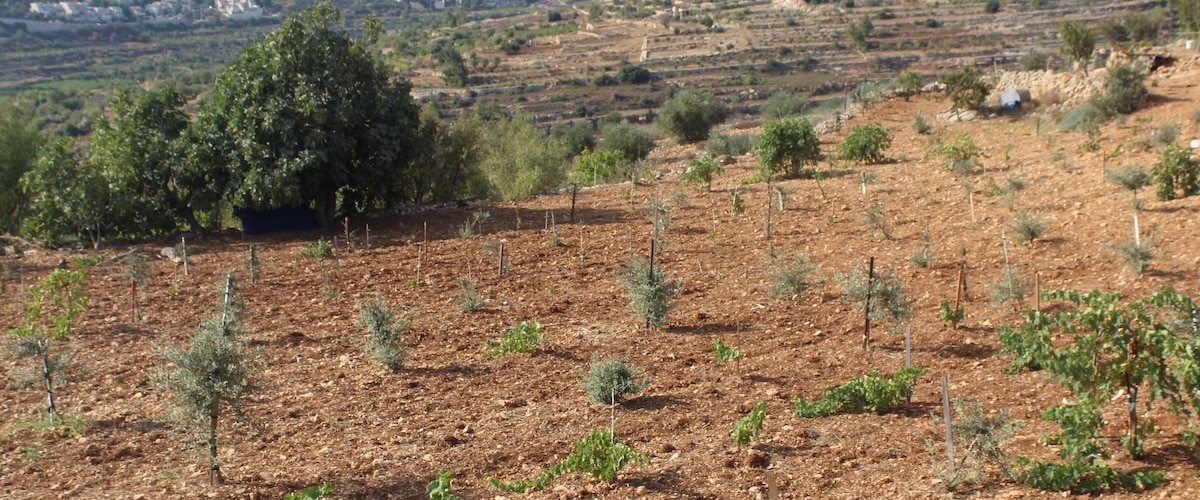
The Joint Advocacy Initiative (JAI), a collaborative endeavor of the East Jerusalem YMCA and YWCA of Palestine, continues to advocate for a just peace in Palestine. Their priority involves mobilizing local and international support, advocating for Palestinian farmers, and urging the application of international law.
JAI’s Olive Tree Campaign distributes sponsored olive tree saplings to farmers as an act of solidarity and support to help keep hope alive. The trees are planted in the occupied West Bank, specifically in Area “C” where olive trees have been uprooted and destroyed by the Israeli Military and settlers, or where land is threatened to be confiscated by Israel. The campaign continues to be a symbol of support for Palestinian farmers, especially those who are constantly at risk of violence.
In 2025, the Olive Tree Campaign planted a remarkable record number of trees despite the aggression and ongoing restrictions. JAI successfully distributed 91,000 olive tree saplings to 52 Palestinian villages in the West Bank, directly benefiting more than 1,550 farmers and their relatives (a total of 7,750 individuals). This success was realized in the face of immense challenges, offering farmers not only an economic lifeline, but a renewed sense of hope and persistence to stay and maintain their land.
The 2025 season also bore witness to the power of international solidarity. Tens of thousands of sponsors worldwide pledged support, assuring Palestinian farmers that they were not alone.
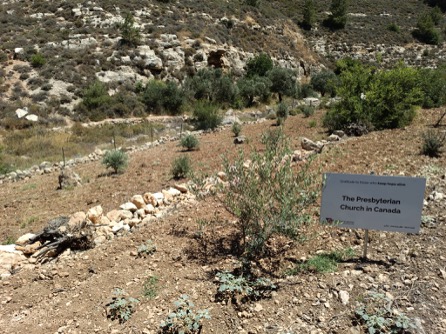
The Presbyterian Church in Canada partners with JAI through the Olive Tree Campaign.
Read stories about farmers who have received olive trees from the PCC’s campaign.
Ibtisam Mohammad Shami
“When I sit here and look across the valley, I remember why I keep coming back. This land is the most beautiful thing I have, and I will never stop taking care of it.” – Ibtisam Mohammad Shami
Ibtisam Mohammad Shami is a farmer from the village of Battir and the mother of four daughters and one son. She owns six dunums (1.5 acres) of land on the edge of the village, where she spends much of her time looking after her olive trees. Farming has always been part of her life, but her connection to this land goes far beyond agriculture. She grew up in Battir, and she says there is nowhere she feels more comfortable than sitting among her trees, looking over the hills where she was raised. Whenever she has a free moment, she heads to the land. It is where she finds peace, even during difficult times.
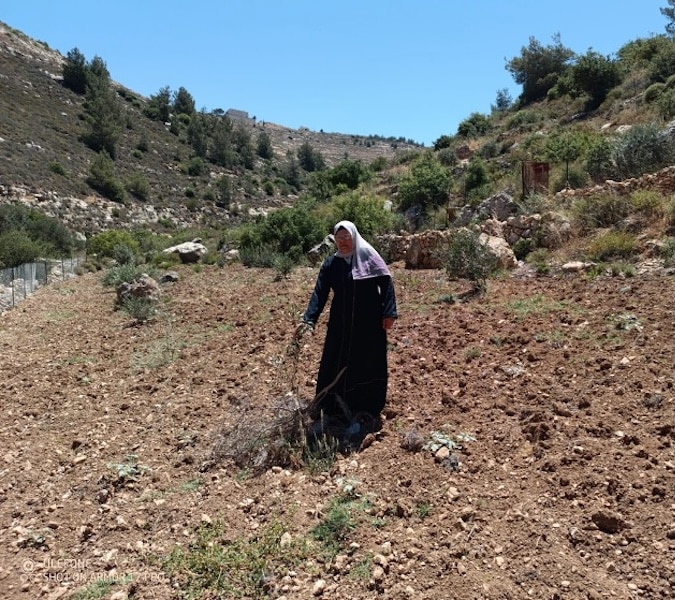
In recent years, the area where her land is located has become increasingly dangerous. Because it lies close to the outskirts of the village, it is frequently exposed to the presence of Israeli settlers and soldiers. One morning, Ibtisam arrived to find that around 30 of her olive trees had been uprooted during the night. Some of the trees were only three years old, while others had been growing for more than 15 years. Seeing empty holes where healthy trees had stood only hours before was heartbreaking. She quietly walked across the land, trying to understand why someone would destroy trees that had taken years of care to grow.
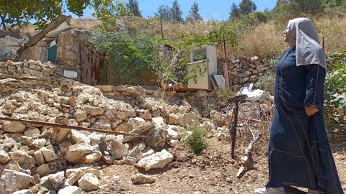
The attacks have continued. The fence surrounding the property has been torn down three different times. Each time, Ibtisam repaired it herself because she wanted to protect what remained of the grove. But every repair was followed by another act of destruction. When the Joint Advocacy Initiative visited her land, parts of the damaged fence were still lying on the ground. She explained that she no longer repairs everything at once. Instead, she fixes small sections little by little and tries not to draw attention, fearing that if the repairs are too noticeable, the fence will simply be destroyed again.
Even with these challenges, Ibtisam has never considered leaving the land behind. She says there are days when she comes just to sit beneath the olive trees and enjoy the view of Battir. It reminds her of her childhood and gives her the strength to continue. For her, caring for the land is part of everyday life. It is where she feels connected to her family, her village, and the memories she has built over the years.
This year, Ibtisam received 40 olive tree saplings through the Olive Tree Campaign. She planted them in the areas where trees had been lost, hoping to restore part of the grove. The campaign also helped provide new fencing materials to replace what had been damaged. Although she knows there is no guarantee that the fence will remain untouched, she believes it is important to keep repairing the land and planting new trees. Giving up, she says, is simply not an option.
Battir is a Palestinian village west of Bethlehem, well known for its agricultural terraces, natural springs, and traditional irrigation system that has been used for centuries. Farming continues to be an important source of income for many families, especially olive cultivation and seasonal crops. Parts of the village’s agricultural land, particularly those close to settlement areas, have become increasingly difficult to access and protect. Despite these challenges, Battir’s farmers continue to work their land, preserving both their livelihoods and the agricultural landscape that has defined the village for generations.
Bandak Bumelbe
Honouring a Friend Through the Land
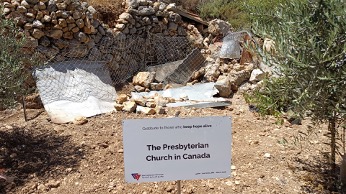
Bandak Bumelbe is a 42-year-old Christian farmer from the city of Beit Jala in the Bethlehem Governorate. Although he owns land of his own, much of his time is dedicated to caring for a plot of land in Al Makhrour that belongs to a close friend who was forced to leave Palestine and settle abroad. Before leaving, his friend asked Bandak to look after the land and promised that it would never be abandoned. Bandak accepted without hesitation, making a personal commitment to protect the property as if it were his own.
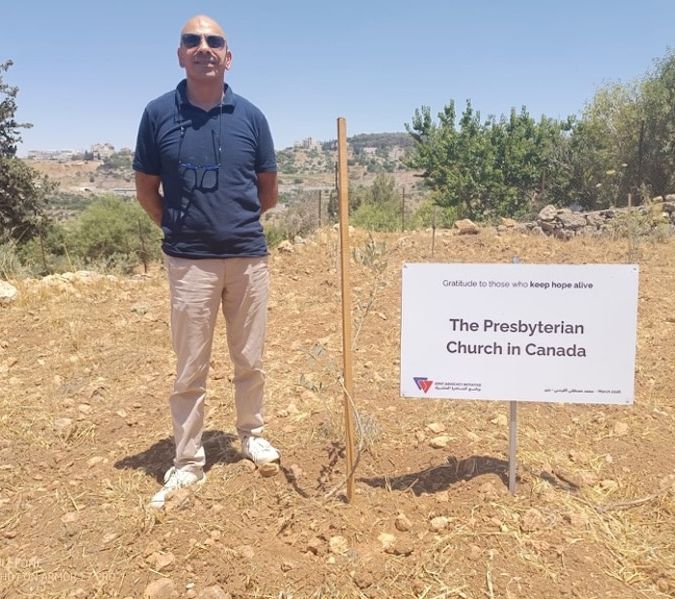
That promise has become increasingly difficult to keep. The land is located deep inside Al Makhrour, in an area where Israeli settlements have expanded over the years. Most of the neighboring plots are now controlled by Israeli settlers, leaving only a few Palestinian-owned lands scattered between them. In some places, only a few meters separate Bandak’s olive trees from settlement land. Despite the risks, he continues to visit the property regularly because he believes that leaving the land uncultivated would make it more vulnerable to confiscation.
Bandak explains that every visit to the land requires careful planning. He usually starts working early in the morning, when the area is quieter and before settler activity increases. As the day progresses, remaining on the land becomes more difficult, and he avoids staying until the evening because he no longer feels safe. Even routine agricultural work has become complicated. Heavy machinery such as bulldozers or tractors can attract unwanted attention, and many contractors refuse to work in the area because they fear harassment by settlers or the confiscation of their equipment by the Israeli authorities. As a result, much of the work must be done by hand.
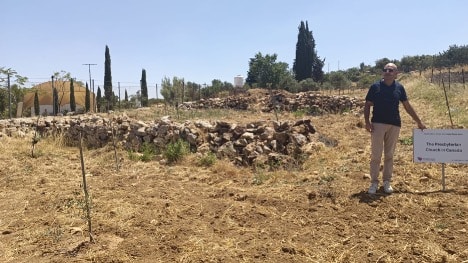
Rather than giving up, Bandak decided to take on the work himself. Together with his son, he spends long hours clearing the land, repairing damaged stone terraces, pruning trees, and maintaining the olive grove. Father and son carry out almost all the work on their own. It is physically demanding, but they see every visit as another step in preserving the land and honouring the promise made to Bandak’s friend.
Bandak says that working on the land is rarely a peaceful experience. During many of his visits, Israeli settlers approach him while he is farming and tell him to keep quiet, stop using his tools, or leave the area because his presence and agricultural work are “disturbing” them. On several occasions, they have warned him that they would call the Israeli military if he continued working or remained on the land for too long. These repeated incidents force Bandak to limit the amount of work he can complete in a single day and to carefully plan every visit. Despite the constant pressure and intimidation, he continues to return to the land, determined to keep it cultivated and prevent it from being abandoned.
This year, Bandak received 40 olive tree saplings through the Olive Tree Campaign. He planted the new trees to fill empty spaces in the grove and strengthen the land’s agricultural use. The additional trees are not only expected to improve the productivity of the land but also reinforce its continuous cultivation. For Bandak, every tree planted is another reason to return, care for the land, and ensure that it remains alive despite the difficult circumstances surrounding it.
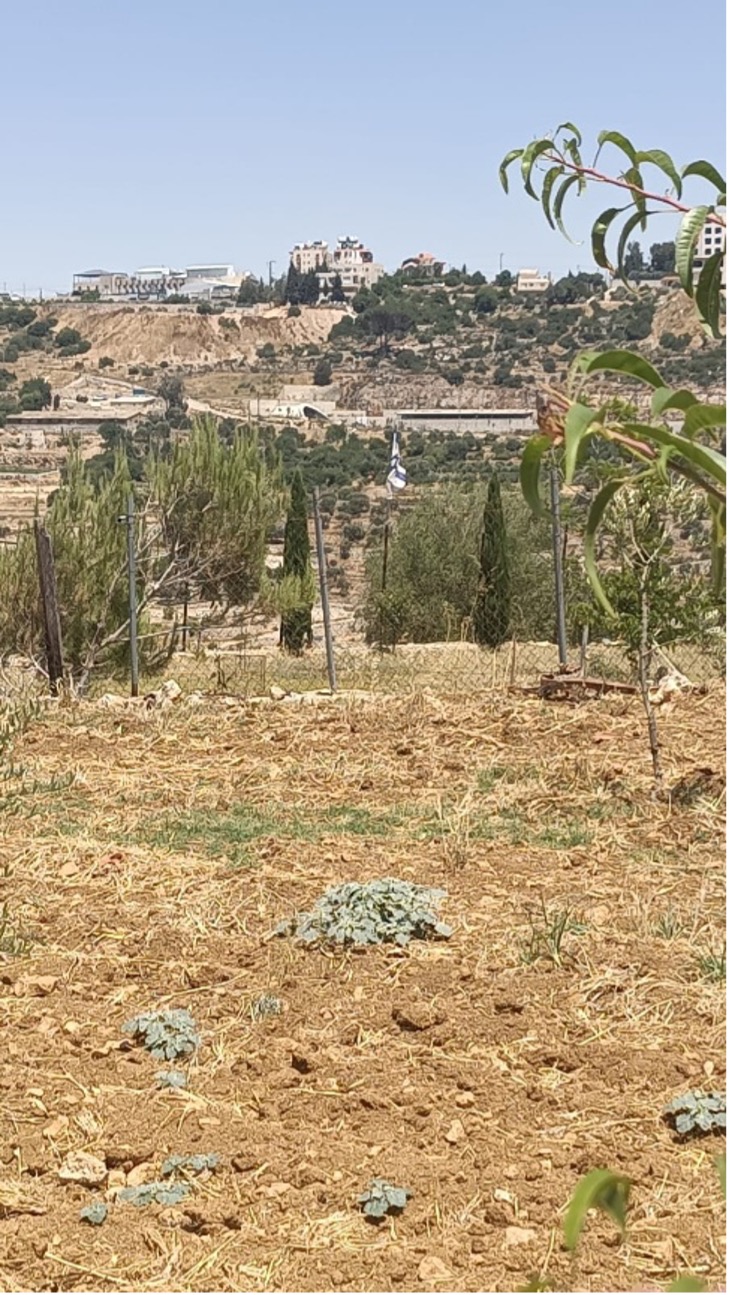
Al Makhrour is one of the most distinctive agricultural landscapes in the Bethlehem Governorate, stretching between Beit Jala, Battir, and nearby rural communities. Recognized as part of the UNESCO World Heritage landscape of Battir, the valley is known for its ancient olive groves, vineyards, natural springs, and centuries old stone terraces. In recent years, however, Palestinian farmers in Al Makhrour have faced increasing restrictions on access to their land due to the expansion of nearby Israeli settlements, the Separation Barrier, and repeated settler harassment. Despite these challenges, many families continue to cultivate their land, believing that regular farming remains one of the strongest ways to preserve their presence and protect this historic agricultural landscape.
Wissam Sbieh
Farming Despite Uncertainty in Ush Ghrab
Wissam Sbieh is a 63-year-old farmer from the town of Al Khader in the Bethlehem Governorate. Although he lives in Al Khader, the land he depends on is in the Ush Ghrab area, east of Beit Sahour. Agriculture has been his family’s main source of income for many years, and today it remains the livelihood that supports his household of seven. Looking after the land is part of his daily life, and despite the growing risks, he continues to make the journey because, as he explains, “This land is what feeds my family. I have no other choice but to keep working it.”
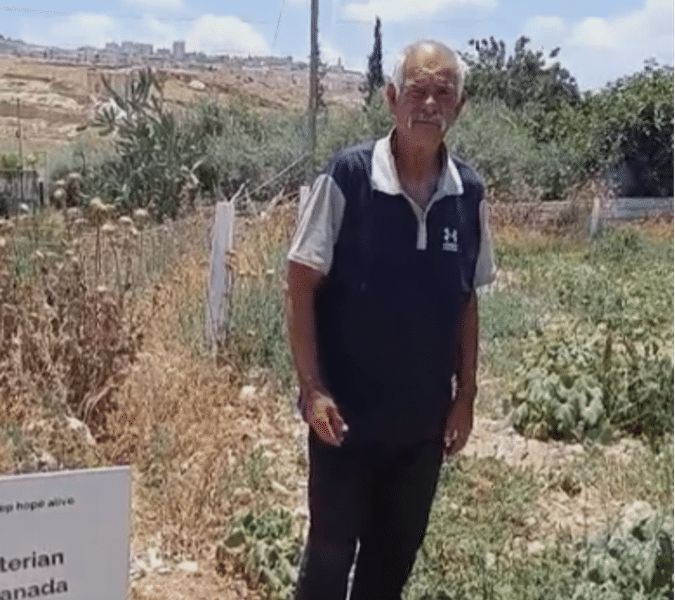
Reaching the land has become increasingly difficult. Wissam says that Israeli settlers are now present in the area almost every day, making every visit uncertain. He explains that the situation has become noticeably worse over the past few years, particularly with the presence of groups known as the “Boys of the Hills.” According to Wissam, these settlers regularly move around Palestinian farmland, intimidating farmers and creating an atmosphere that discourages people from working their land. Their presence has made ordinary farming activities stressful, forcing many landowners to think twice before visiting their fields.
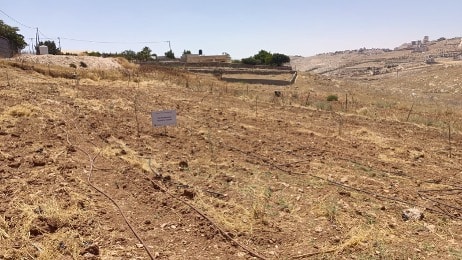
The difficulties are not limited to simply accessing the land. Wissam says he has repeatedly faced problems while trying to bring water tanks, farming equipment, and other basic supplies needed to maintain his olive grove. On several occasions, he was stopped before reaching his land and prevented from continuing. To avoid confrontations, he now plans his visits carefully, choosing specific hours when he believes the area will be quieter. Even then, there is no guarantee that he will be able to work without interruption. Encounters with settlers can happen unexpectedly, forcing him to leave before completing the work he came to do.
Only three weeks ago, Wissam traveled to the land with his sons intending to carry out routine agricultural work. Shortly after arriving, they were ordered to leave and told that they could not remain in the area for what they were told were “security reasons.” The family returned home without being able to finish their work. For Wissam, incidents like this have become increasingly common and have added another layer of uncertainty to every farming season.
His concerns have grown even stronger after seeing what happened to neighboring farmers. One of the adjacent plots was recently taken by the Israeli authorities and declared state land. Watching this happen has left Wissam worried that the same could happen to his property. Rather than discouraging him, however, it has strengthened his determination to continue cultivating the land. He believes that abandoning it would only increase the risk of losing it, so he continues to visit whenever he can, despite the difficulties and the constant pressure.
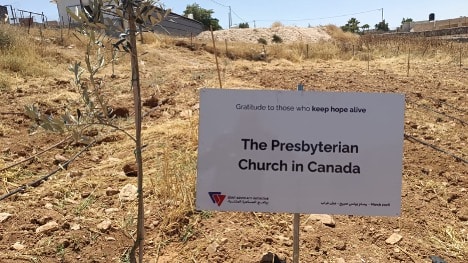
This year, Wissam received 80 olive tree saplings through the Olive Tree Campaign to strengthen the agricultural use of his land. He planted the new trees as part of his ongoing efforts to keep the property cultivated and productive. Every visit to the land requires time, planning, and patience, but Wissam continues because he believes that caring for the land is the strongest way to protect it. Together with his family, he remains committed to farming, hoping that their continued presence on the land will help preserve it for the years ahead.
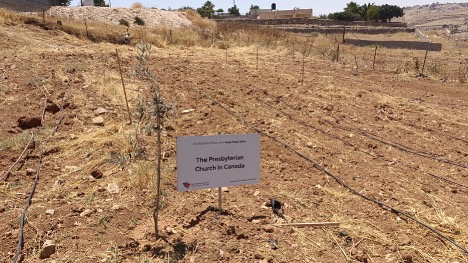
Ush Ghrab is an area located east of Beit Sahour in the Bethlehem Governorate. Once the site of an Israeli military base, it overlooks large areas of agricultural land belonging to Palestinian communities. In recent years, the area has experienced an increase in settler activity and repeated incidents affecting farmers’ access to their land. Palestinian landowners continue to cultivate their fields despite these challenges, as agriculture remains both an essential source of income and an important means of maintaining their presence on the land.
Mohammad Al Qadi
Living Between Two Towns, Yet Cut Off from Both
Mohammad Al Qadi lives with his family in Al Baida, a small rural area located between the Palestinian communities of Beit Sahour and Za’atara in the Bethlehem Governorate. Although the land is close to both towns, its location has left the family isolated from many basic services. Under Israeli maps, the area is identified as Al Baida, but for Mohammad, it is simply the place where his family has built their home and worked the land for years. Reaching either Beit Sahour or Za’atara is often difficult because of the constant presence of Israeli soldiers in the area and the nearby bypass road used by Israeli settlers, making even ordinary daily activities more complicated than they should be.
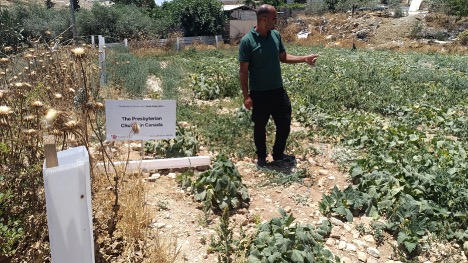
Mohammad’s family depends on the land surrounding their home. Olive trees, open fields, and the small plots they cultivate are an important source of income, but they are also what keeps the family rooted in the area. Over time, however, working the land has become increasingly difficult. Mohammad explains that Israeli soldiers regularly monitor the area, paying close attention to anyone entering or leaving. According to him, simply working on his own land often attracts unwanted attention. He says he is harassed on an almost daily basis, with soldiers questioning his presence and closely watching his activities whenever he is outside caring for the farm.
The level of surveillance became clear during a recent visit by the Joint Advocacy Initiative to document Mohammad’s story. While staff members were photographing the family and the newly planted olive trees, two Israeli military jeeps arrived at the site to investigate what was happening. Although no confrontation occurred, the visit highlighted the reality that Mohammad and his family live with every day. Even a short visit by visitors or humanitarian organizations is quickly noticed, reinforcing the feeling that the area is under constant observation.
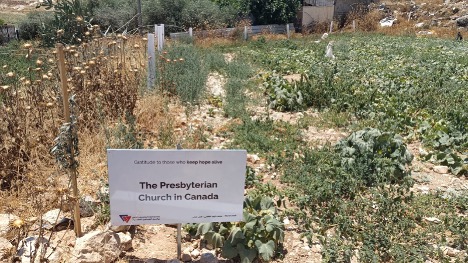
Despite these conditions, Mohammad has no intention of leaving. He says his home and land are the only place his family has, and abandoning them is not an option. He is deeply concerned about the future of the area, especially because there are ongoing fears that parts of the surrounding land could be taken to expand or construct roads serving nearby settlements. For this reason, he believes that keeping the land cultivated is one of the few practical ways to protect it. Every season that the fields remain active is another reminder that the land is still being used and cared for by its owners.
This year, Mohammad received 40 olive tree saplings through the Olive Tree Campaign. He planted them around his property as part of his ongoing effort to strengthen the agricultural use of the land. For him, the trees are more than an agricultural crop. They represent another reason to remain on the land, continue caring for it, and demonstrate that it is still actively cultivated despite the difficult conditions.
During the visit, Mohammad’s family also spoke openly about the challenges they face. Because of the area’s location, bringing agricultural equipment to the property is often difficult and expensive. Access to water is another daily struggle. The family is not connected to a regular water network and depends on purchasing water tanks, which must be transported to the area at a significant cost. These additional expenses place a heavy burden on the household, making farming more difficult while increasing the cost of simply remaining on their land.
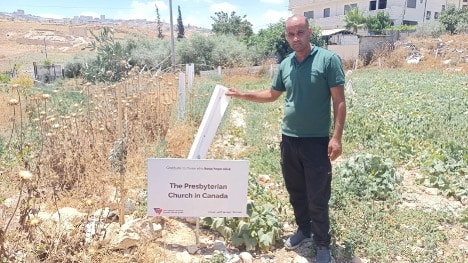
Al Baida lies in a sensitive area between Beit Sahour and Za’atara in the eastern Bethlehem Governorate, close to Israeli settlement infrastructure and bypass roads. While the surrounding landscape has traditionally been used for olive cultivation and grazing, the area’s strategic location has exposed Palestinian residents to increasing movement restrictions, military activity, and pressure on agricultural land. Families living in Al Baida continue to cultivate their land despite these conditions, relying on farming as both a source of livelihood and a way to maintain their presence in an area facing growing challenges.