


Easter has an entirely different feel from Christmas. Even though we know that December 25th was selected for the date of Jesus’ birth in the third century to coincide with the winter solstice of the Roman Empire, it is now fixed in our memories and in our calendar. I even was part of a Christmas gathering where a birthday cake with a candle was presented and we sang “Happy Birthday” to Jesus. We do not have to look for Christmas, it is there, on the calendar and on our to-do list. No one looks up the timing of Christmas.
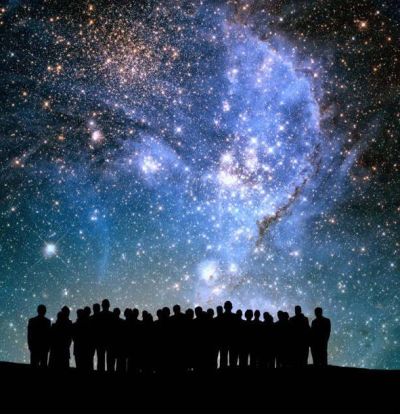 But, Easter is a moveable feast. The official word for calculating the date of Easter is “computus,” a forerunner linguistically and operationally to the ubiquitous computers of our modern lives. In order to establish the date of Easter, we need to obtain information from the Jewish tradition of the Passover, from the lunar cycles and from the Metonic cycle, which approximates the dates of the full moon relative to the solar year. And because so many things contribute to the timing of Easter, the dates for the holiday can range over a month apart from year to year—March 22nd through April 25th. And all of this only accounts for the the dating of Easter within the structure of the Gregorian or “western” calendar. If you are Eastern Orthodox, you use the Julian calendar, which usually means for you, Easter is later in the Spring. The most compact way to state Easter dating is: the first Sunday after the Paschal (Passover celebration) full moon, as long as that full moon happens on or about March 21st. It was not until the Council of Nicaea in 325 CE that Easter became the “simplified” formula that we still use today. Until we find Easter each year, our church calendar is adrift—Ash Wednesday, Holy Week, Ascension and Pentecost all orient themselves around the discovery of Easter.
The erratic nature of Easter’s date, which I once looked at as an annoyance, I now see as an ingenious aspect of the holiest of days in the Christian year. We have to go in search of Easter. And, it is not a search that we can undertake alone. Our search rightly requires us to be attuned to our Jewish relatives and their timing of Passover. We also need to look beyond our human connections to the celestial movements. What are the lunar cycles and how do they correspond to the solar year? We no longer have to consult the sky-gazers in our midst, as did the ancients, but when we search for Easter through our complicated pathway, we are drawn into communion with our distant Christian relatives whose life post-sundown in a world without incandescent light turned them into experts on celestial movements and events. In my hunt for Easter I am always reminded of that unique title for Jesus in John—Logos, so flatly translated as “word”—was a borrowed term from Stoic philosophy, where the logos was the essence within the universe that made sense and gave rhythm to everything. The seasons were guided by the logos, as were the harvests, the cycles of life, the logic of music and mathematics. The logos provided reason, meaning and beauty in the cosmos, and the community who wrote John’s gospel understood Jesus to be the embodiment of that logos. When we search for Easter we stand in a long line of believers who looked to the rhythm of the universe to find that day.
There is also the ingenuity of the search for Easter that relates to the post-crucifixion chaos. The women who searched the tomb first, the men who ran to do their own search that confirmed the women’s story of the empty tomb. Then the story of another celestial search in Luke, once the ascension had occurred, in which the mesmerized apostles could not help but gaze upward, trying to catch a glimpse of the risen Jesus once again. And I like to think that the excited search of children on Easter who race to discover the hidden eggs is a ritual that both echoes the historic search for Easter and primes the children to live a life in search of the profound.
The obscurity of Easter demands something of all Christians. As we take up our yearly search with the intent to pin it down, we should be mindful that the logic of the universe is profound enough to require our reflection upon our heritage, our history and the rhythm of the cosmos in order to discover the mystery of the risen Christ once again. See you next year.
Dr. Lee Johnson
March 2026
You can download a PDF of the reflection on the Worship webpage on the top right under “Reflections on Themes of the Liturgical Year”.