


One could write several reflections on violence in Israel and Palestine in recounting the history, commenting on what has appeared in the news over the last few years. For that matter, I could write several reflections on violence and threats of violence based on the events that occurred during the eight-day pilgrimage the PCC sent me on as Moderator of the General Assembly. We saw numerous Israelis carrying assault rifles in restaurants and bars and even walking with their children through the Old City of Jerusalem. And then there were threats of missiles and missile attacks fired from outside Israel and Palestine that terrorized everyone. These events and images all entrench opponents in the ongoing conflict and set the holy city of Jerusalem on edge.
However, I wish to conclude these reflections on the visit to Palestine and Israel by focusing on the non-violent resistance we observed and highlighting the organizations of Israelis and Palestinians working together for a peaceful resolution to the ongoing violence. In many respects, all the organizations we met and the people we interacted with were engaged in some form of non-violent resistance that breached the Israel-Palestinian divisive walls, both literally and figuratively, through peaceful advocacy and programs.
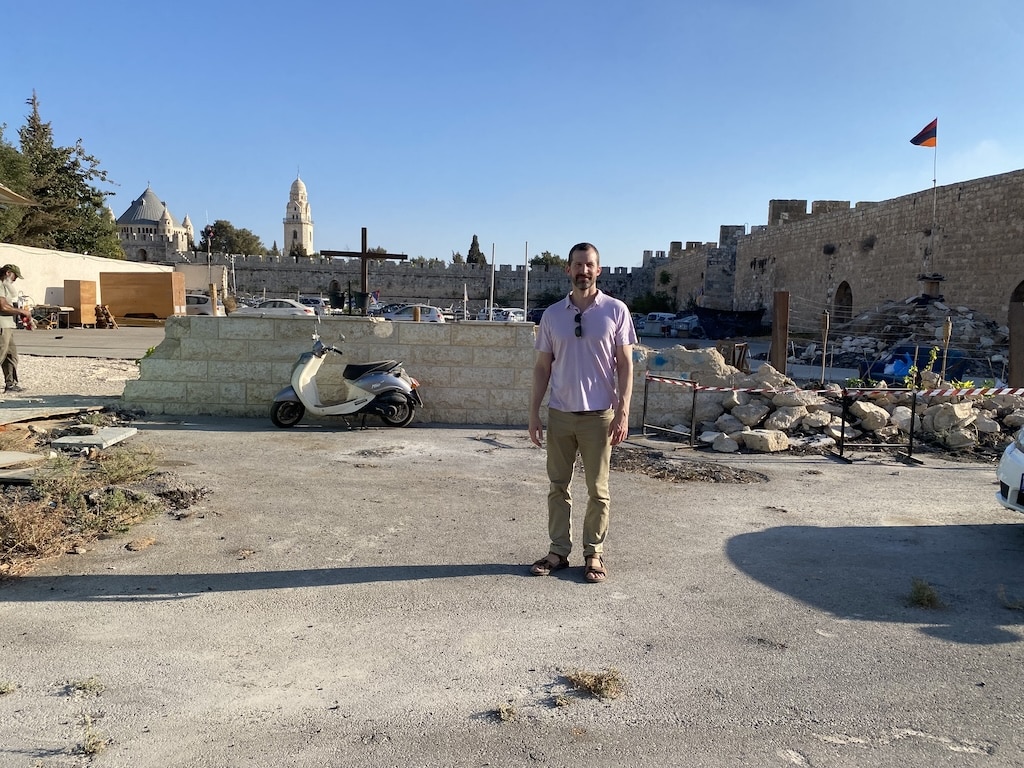
On our first day in Jerusalem, we met with Omar Haramy, the Director at Sabeel , the home of Palestinian Liberation Theology. He brought us to the Armenian Patriarchy, where we met some of the young men who built an encampment to preserve and defend land that Israelis seek to confiscate in the Old City following a series of shady land deals made with the Armenian Patriarch.
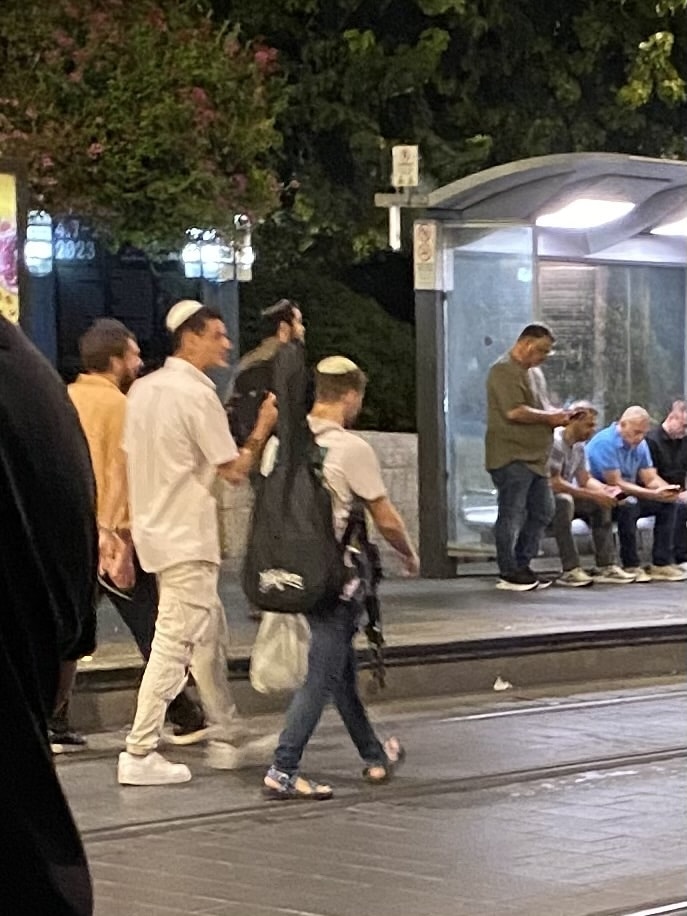
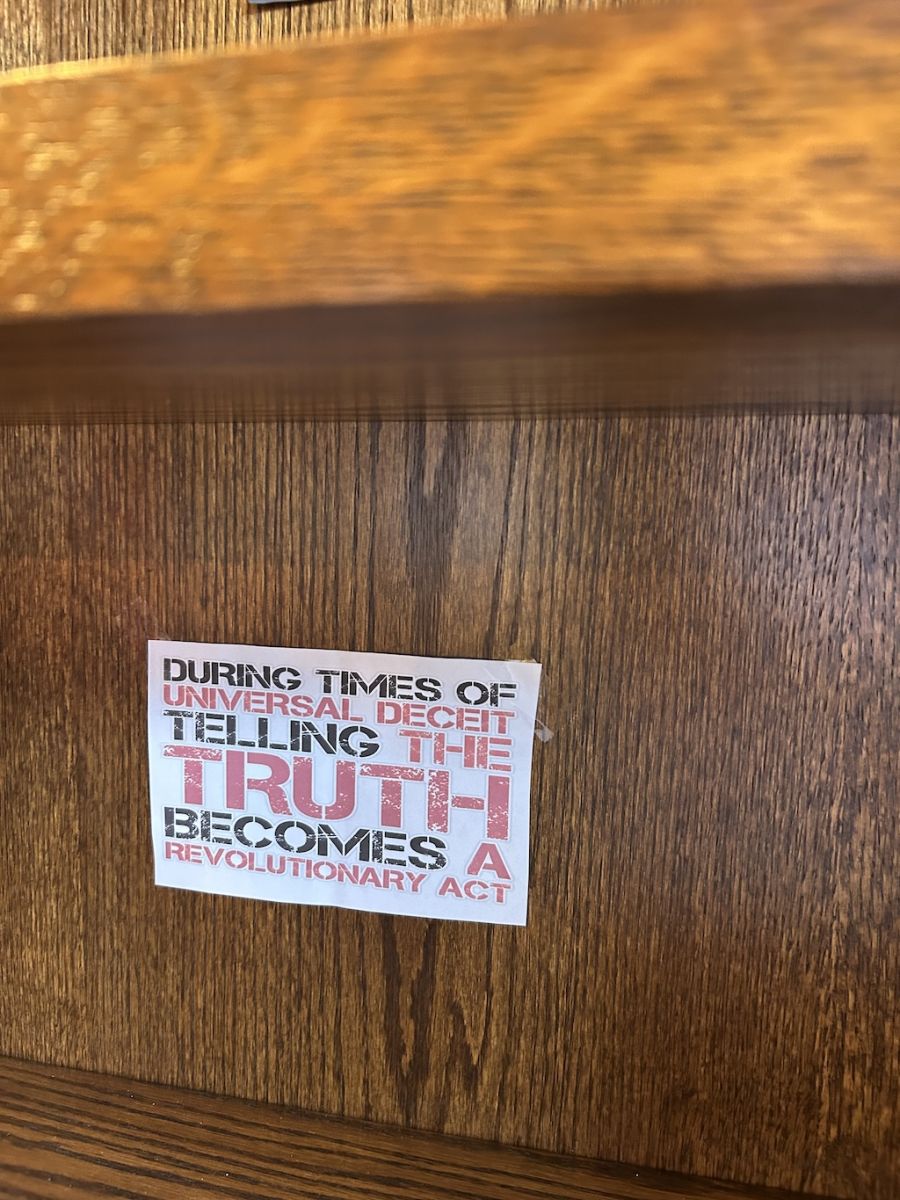
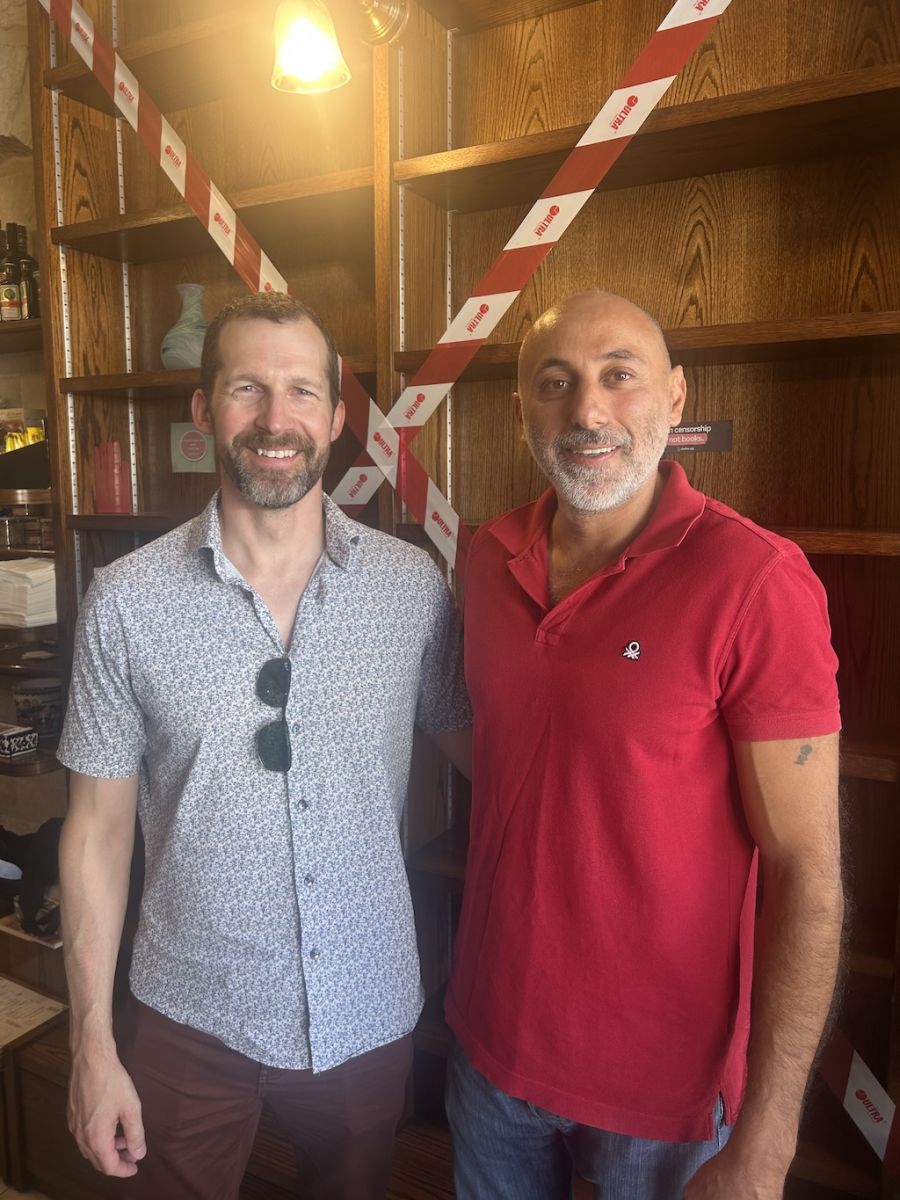
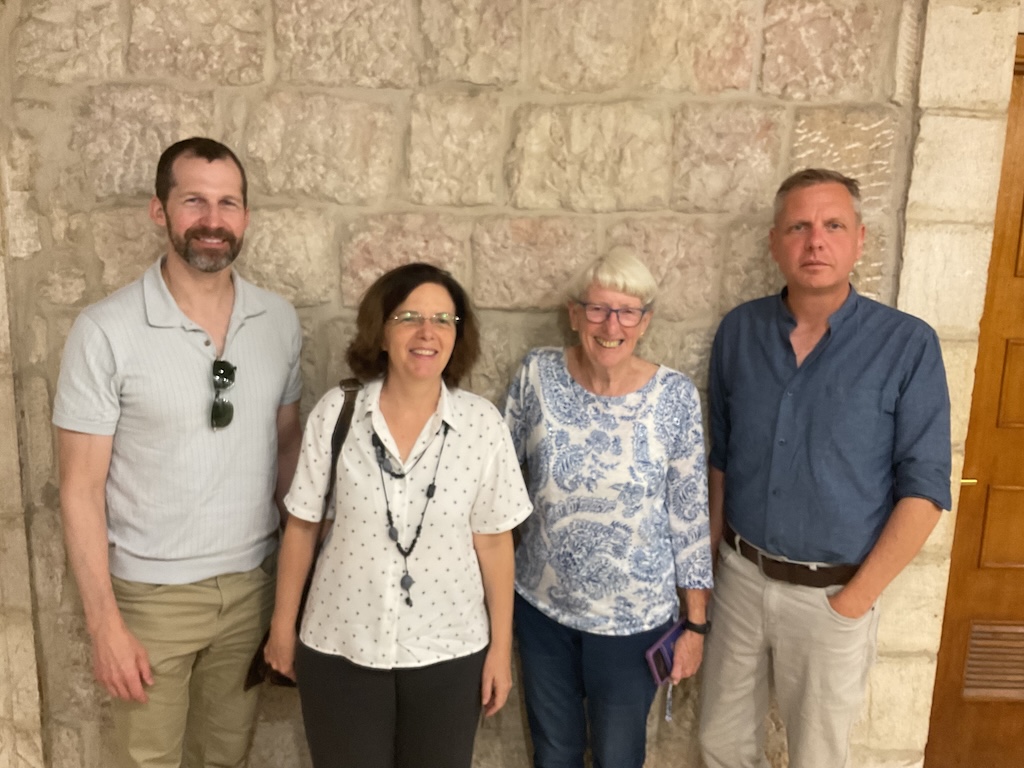
On our way to check in at the hotel near New Gate, we came across The Gateway Bookstore and Café. We spoke with the café owner, Anton Sabila, who had recently been released after days in police custody, on the condition that he stay away from his café for two weeks. We arrived on the day his café reopened. Israeli police had raided the Palestinian Christian bookstore/café, arrested Anton, and transferred him to the Qishla police station at Jaffa Gate in occupied Jerusalem. Israeli authorities claim that the library contained Palestinian books that allegedly “incite” against the occupation. While bookshelves were cleared of books, clever stickers with slogans like “During times of universal deceit, telling the truth becomes a revolutionary act” were posted in protest.
We met with Rabbis for Human Rights , an organization comprising rabbis and rabbinical students from diverse Jewish traditions. Some of their work is to provide a protective presence by accompanying Palestinian farmers during the olive tree planting and olive harvest to provide Palestinians safe access to their lands, to help prevent violence and harassment from settlers and to call attention to this ongoing settler violence that threatens the livelihood of the farmers and their families.
B’Tselem , The Israeli Information Center for Human Rights in the Occupied Territories, is an organization with half of its staff being Israeli and the other half Palestinian. During our visit, Sarit Michaeli from B’Tselem discussed their report “Our Genocide” with us. While commenting on the disconnect between Jewish religious principles and the actions of the current government in Israel, Sarit confesses that her personal inclination is to say that this is not done “in my name”. However, she says, “but it is done in my name” because she pays taxes; she and every Israeli citizen must accept the moral responsibility for what is done by the current government of Israel.
Defence for Children International, Addameer, and HaMoked were other organizations we held conversations with. They collect data and track details of detentions. At the time of our visit, the number of people taken captive by Israel increased from just over 5000 to over 11,000 since October 7, 2023. Most of these prisoners are from the occupied West Bank – 400 of them are children. Israel has disappeared Palestinians under “Administrative Detention”, which means, among other things, that a person is held without trial without having committed an offence, on the grounds that he or she plans to break the law in the future. These organizations provide legal services to detainees advocating for the right to a defence. Some of these organizations continue their work despite the limitations placed on them for being labelled as a terrorist organization by the government of Israel, even as they are lawyers working within Israel’s legal system.
In total, we met with 15 organizations representing hundreds of staff and volunteers, and held several casual conversations with Palestinian and Israeli citizens engaged in various forms of non-violent resistance.
I am grateful to my fellow pilgrims, the Rev. Dr. Dorcas Gordon and the Rev. Ian Ross-McDonald (General Secretary, Life and Mission Agency), to our guide Yusef Daher (WCC-Jerusalem), and my thanks to the following persons and organizations who shared their work and offered their reflections with us:
Kairos Palestine
Parents Circle—Families Forum
Wi’am
Dr. Mazin Qumsieh at the Palestine Institute for Biodiversity and Sustainability
The Department of Service to Palestinian Refugees
Patriarch Emeritus Michel Sabbah
World Council of Churches – EAPPI
Sabeel
Rabbis for Human Rights
Advocacy officer of the Greek Orthodox Patriarchate
Defense for Children International
Addameer
HaMoked
Rev Dr. Fadi Diab, and the congregation of St. Andrew’s Episcopal Church, Ramallah
Jerusalem Waqf Director
B’Tsalem
UN-World Food Program