


Rosh Hashanah, the Jewish New Year, began at sunset on September 22. Israeli security had been increased in the Old City of Jerusalem for the celebrations.
This is also the day we make our way through the narrow, walled streets towards the Temple Mount, home to the Al-Aqsa Mosque compound. As we approach the entrance, we are stopped by Israeli police who enforce the status quo agreement, “Muslims only”.
Briefly, Jerusalem’s status quo is a compilation of historical and legal agreements regarding the administration and custodianship of holy sites. Included in the status quo is an agreement made in June of 1967, in which Al-Aqsa Mosque was recognized as a purely Muslim property and that only Muslims have the right to pray on the site. While non-Muslims could access the site for some time, that all changed in 2000 when opposition leader Ariel Sharon entered the Al-Aqsa compound escorted by 1,000 Israeli police personnel, sparking the second intifada, which led to the death of around 1000 Israelis and over 3000 Palestinians. Non-Muslims were banned from the site. However, after Ariel Sharon was elected Prime Minister, he allowed non-Muslims to enter the compound through al-Magharbeh Gate, ignoring Mosque regulations.
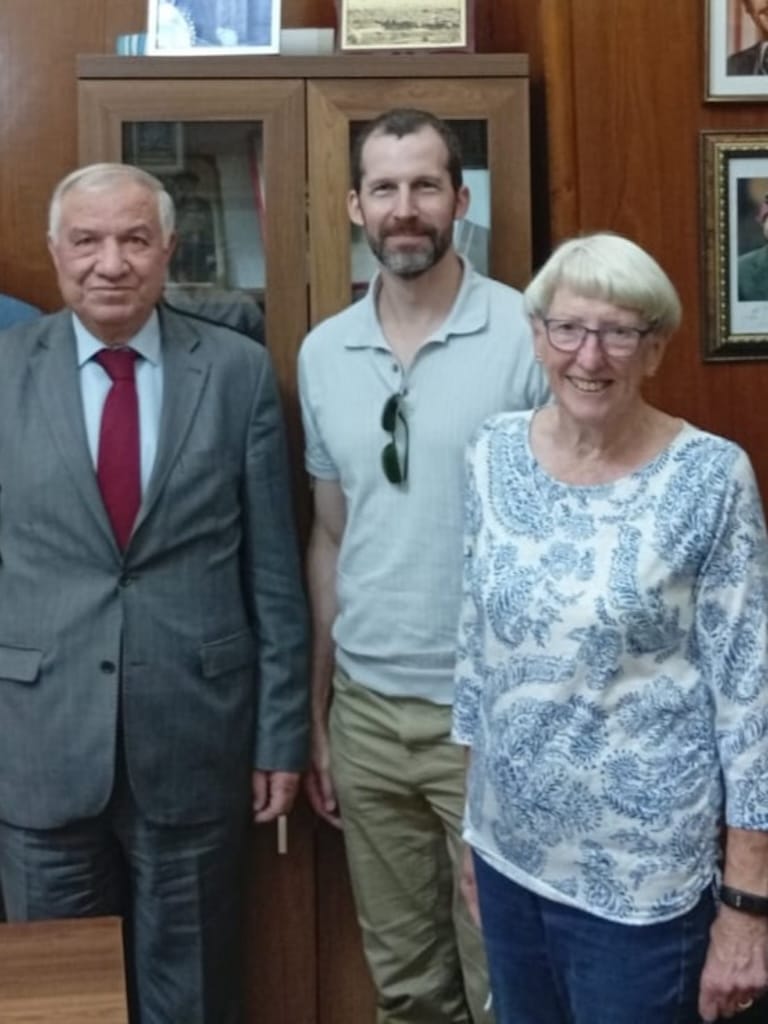
When we were confronted by the Israeli police, who were upholding the status quo for us, we were not seeking to enter the compound to sightsee. We had an appointment to meet the Waqf Director, Sheikh Azzam al-Khatib, whose office entrance was just beyond the police station. The Sheikh explains the reason for the Muslim Only restriction is to prevent Jewish extremists from entering. Nevertheless, extremists transgress the barriers and disregard the status quo almost daily.
Sheikh al-Khatib added, “We respect Judaism and Christianity because we believe in one God – we want peace. We acknowledge that Jews were always living here, and that we are neighbours, colleagues, and friends living under one system. Today, we are against Jewish extremists who are trying to divide and discriminate and are attacking religious groups. The problem now is that they are even backed by the government’s forces. Some extremist groups are saying they need to destroy the mosque in order to build the Temple again, even as this is an important mosque that complements Mecca.”
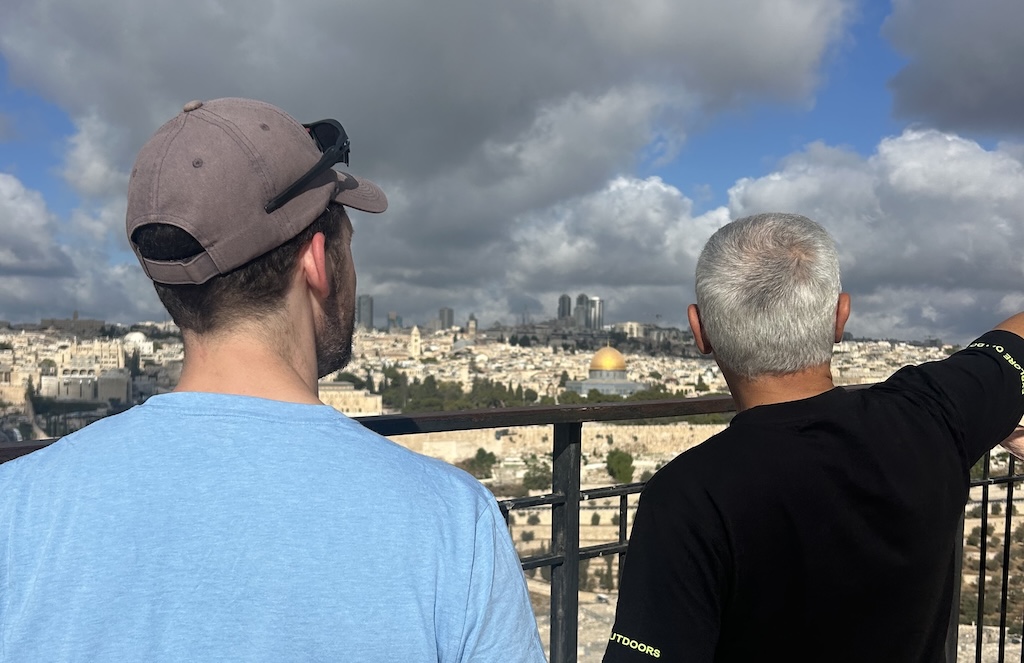
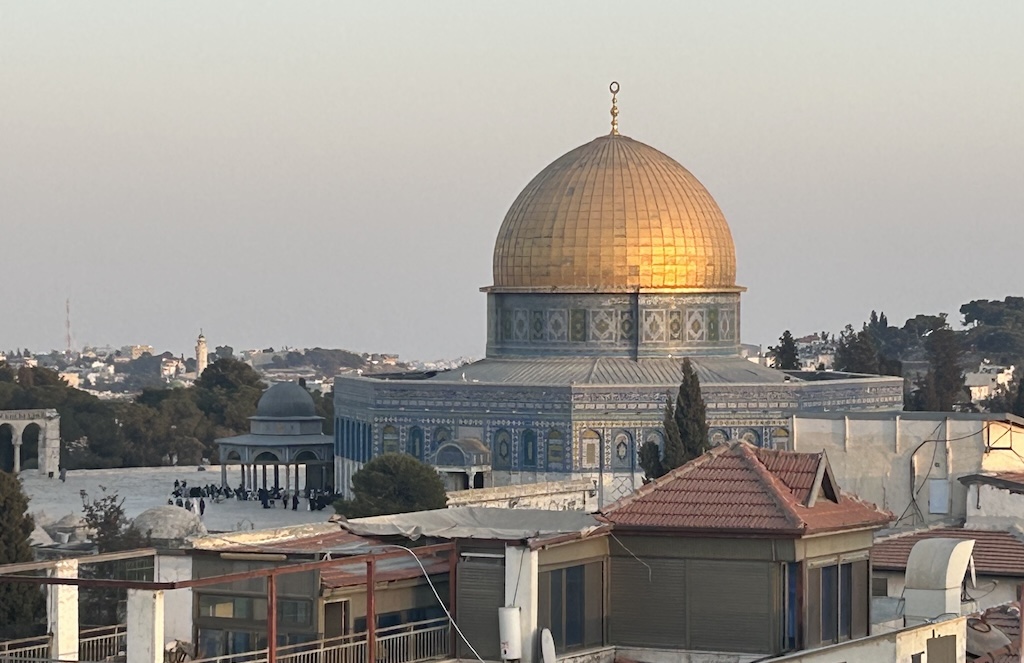
During our visit, Sheikh al-Khatib shared a brief history of Al-Aqsa and its importance to Muslims . He tells us of the challenges over many years of Jewish extremists’ attempts to set off explosives to destroy the site and the various incursions throughout the year. He also shared with us the relationship between Christians and Muslims in the Old City, including the story of Omar, the second successor of the Prophet Muhammad, who in the 7th century was given a tour of the Church of the Holy Sepulchre, the holiest site for Christians containing the locations of Jesus’ crucifixion and burial. Omar was in the church when it was time for noon prayer. Patriarch Sophronius invited Omar to pray in the church, but Omar refused, saying that he feared future generations of Muslims might seek to make it a Muslim holy site. So, he prayed outside the Church, where the Mosque of Omar now stands. It should be noted that the custodians of the keys to the Church of the Holy Sepulchre are Muslims, as a way to maintain peace among the six denominations that share custody of the church. Sheikh al-Khatib shares this as an example of interfaith cooperation between Muslim and Christian Palestinians.
While we were visiting the Waqf Director, he received a call from the King of Jordan’s office. At some point, he informs the agent he is speaking with that he has visitors from The Presbyterian Church in Canada, and a few pleasantries are exchanged through our guide and interpreter, Yusef. After the call, Sheikh al-Khatib explains the reason for the call. He needs to find an Imam to lead services the coming Friday. As clergy, we can sympathize with the struggle of Interim Moderators trying to find supply on short notice. However, the reason for looking for someone to fill in is a unique yet common challenge at Al-Aqsa. After the last Friday, the Imam was arrested by Israeli soldiers and placed under house arrest, preventing him from going to the Mosque. Sheikh al-Khatib notes that three Imams have recently been arrested and wonders who can lead the services now that he can’t find anyone to give the sermon. The Imams were arrested for having said in their sermons what the people were feeling and thinking, so they put them under house arrest. Exhausted by the challenges they face, Sheikh al-Khatib confesses, “Today we can’t even think about freeing Palestine. We are too busy finding an Imam and feeding people in Gaza.”
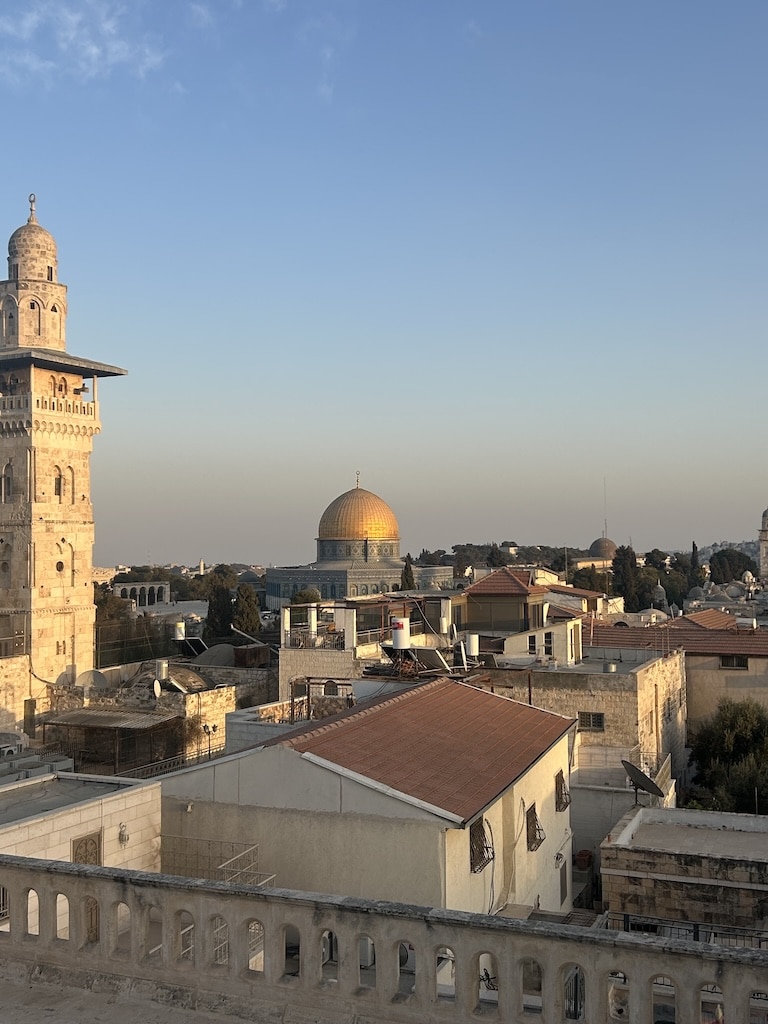
This past August, far-right Israeli minister Ben-Gvir led a group of settlers into the Al-Aqsa Mosque compound and led prayers violating the status quo, echoing the actions of Ariel Sharon. Even during this year’s Rosh Hashanah, a group of settlers entered the compound under Israeli police protection.
The Waqf is afraid this could lead to another religious war, so they attempt to keep the videos of these incursions away from the media. The mosque is surrounded by so much security, and even young Muslims are not allowed to come and pray sometimes, to keep violence from breaking out.
For Rosh Hashanah, the increased security in the Old City was intended to ensure a secure environment for Jewish people, who navigate it effortlessly. However, for Muslims and Christians during holidays, checkpoints are set up, gates are closed, preventing access to mosques and churches in a city where rules are both enforced and disregarded at the discretion of the Israeli police and government officials.