

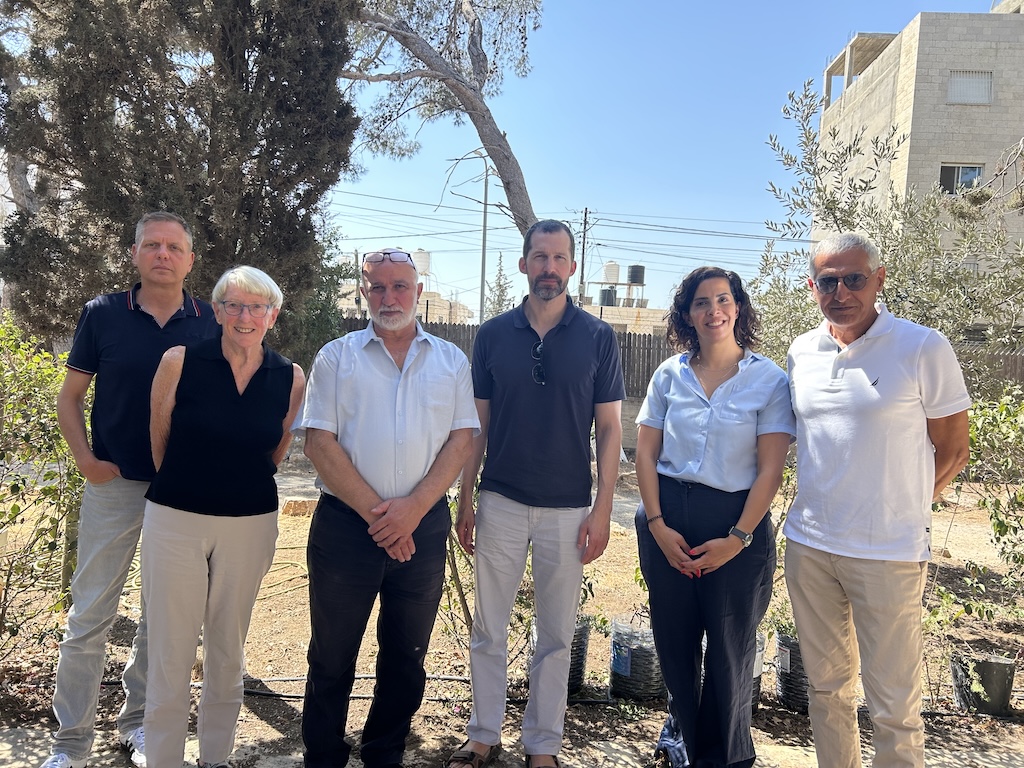
A short distance from Shepherds’ Field, where tradition says the shepherds who first went to the manger were greeted by angels, we gathered at the YMCA Community Center in Beit Sahour. There, we met with Nidal Abu Zuluf and Mays Nassar, who work with Kairos Palestine, a Christian Palestinian movement born out of the Kairos Document published in 2009. The 2009 document advocates for ending the Israeli occupation and achieving a just solution to the conflict. This year, on November 14, Kairos Palestine released the Kairos II Document, “A Moment of Truth: Faith in the Time of Genocide.”
As Kairos continues its advocacy, drawing attention to the realities faced by Palestinians, especially for the churches, they expressed concern that they see only changes in the language of the church, not action; they see changes in language but not in the church’s real support and advocacy.
“We want empathy, not sympathy.”
“Diplomatic language is no longer acceptable.”
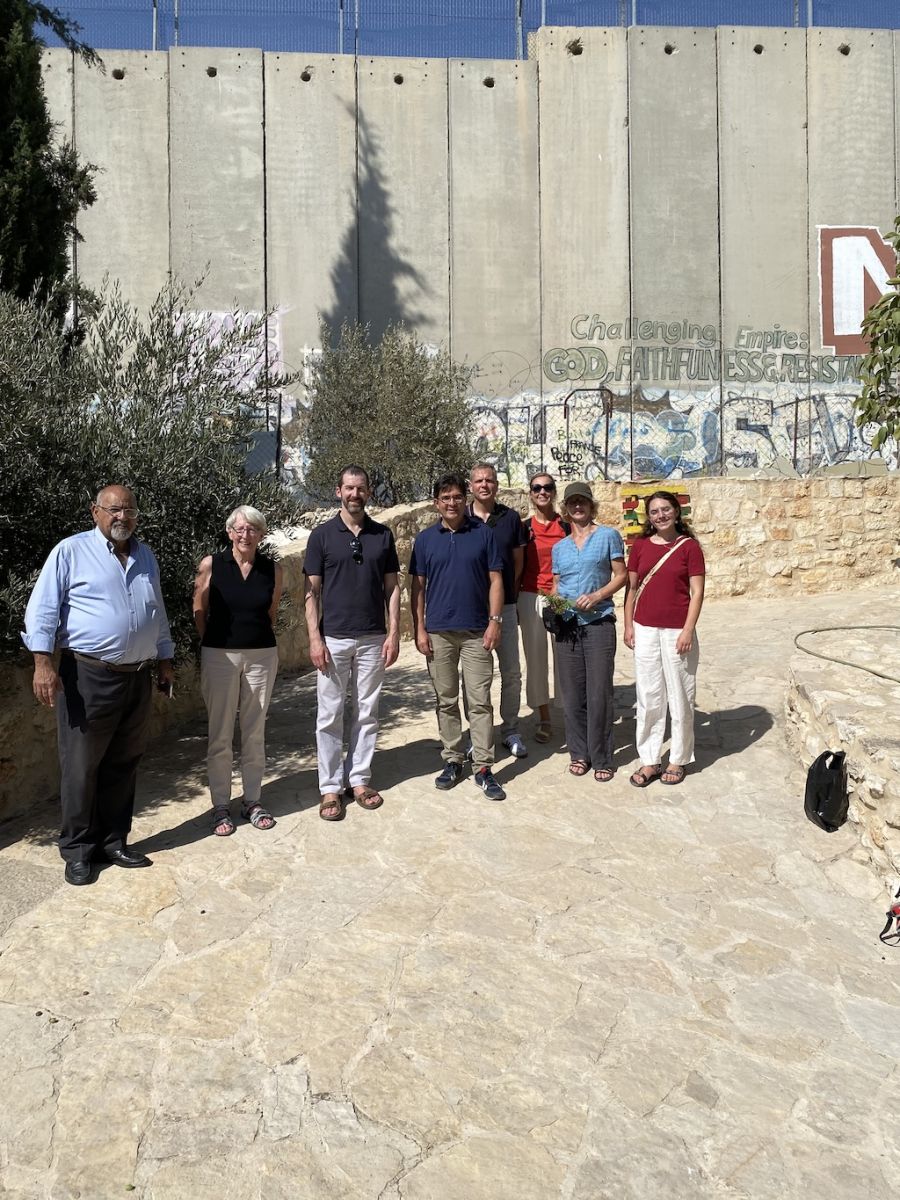
As we visited with fellow Christians in Palestine, I found myself rendered silent by the inhumanity Palestinians experience. I was saddened to hear from Christian Palestinians the feeling of abandonment by Christian Churches and angered at the betrayal of Christian Zionism. To offer prayers for “peace” feels empty if not insulting in this space, when the prayer request coming to us is a call for action – to see and hear, and to respond.
Nidal and Mays remind us that Israel has always been, like Canada, a settler colonial project and that, increasingly, ethnic cleansing, apartheid, and now we know genocide, have been used in re-settling the land by the Israeli government.
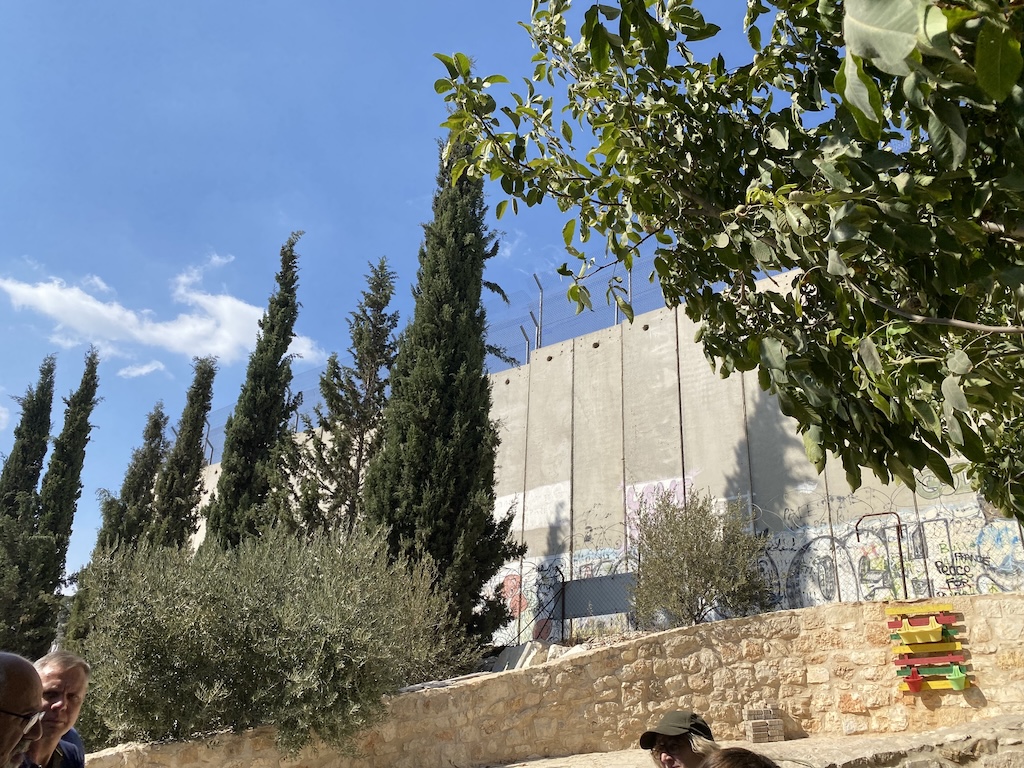
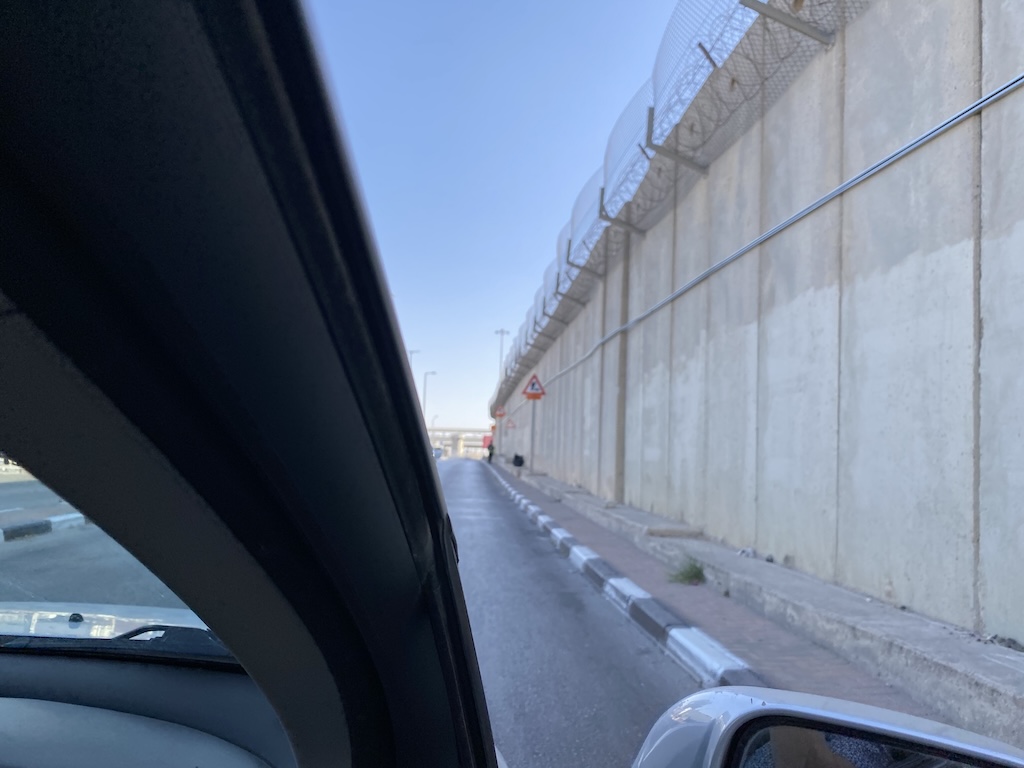
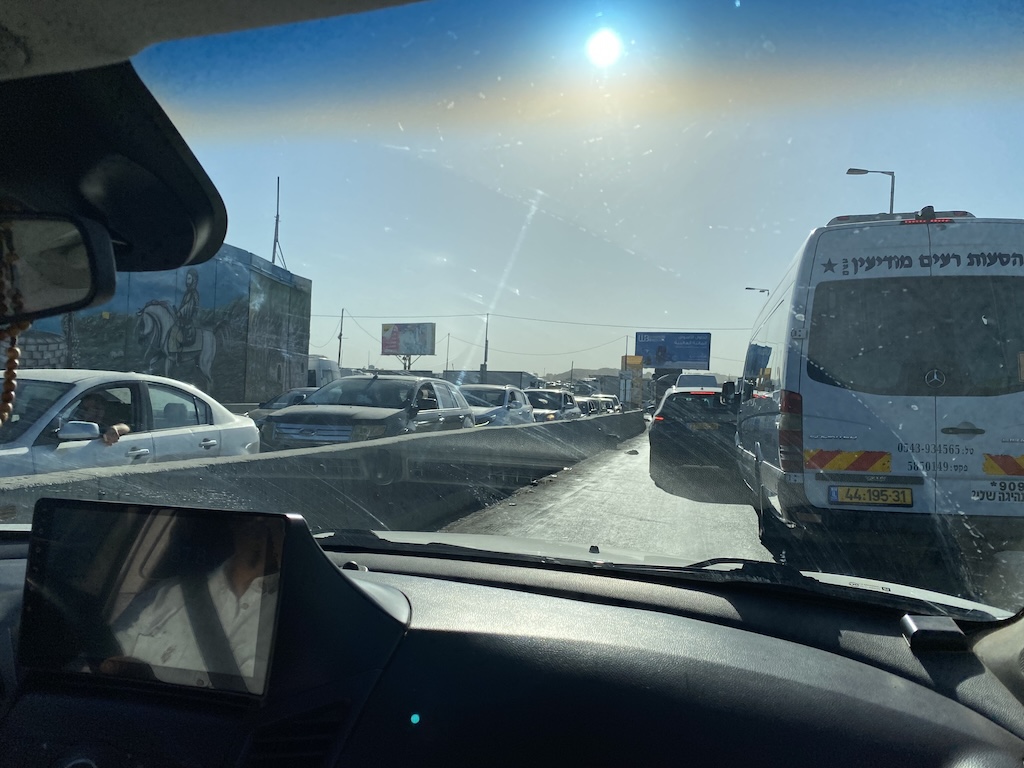
People don’t know if they should stay or not, or whether they want their children to stay. People are exhausted as the state of Israel continues to make life more difficult and unbearable.
While the world has seen the genocide of Palestinians on display in Gaza, a documentary released by Kairos Palestine, “The Silent Genocide,” shares the experience of Palestinians living in the West Bank. There are over 100 gates/checkpoints around Bethlehem alone, equipped with electronic, remotely controlled machine guns. There are nearly 1000 checkpoints in the West Bank. Towns and cities can be cut off from other Palestinian communities and from the world by Israel at any moment.
People share stories with us of being detained or family members being detained. Everyone has a story. One person tells of a recent humiliating experience at a checkpoint, which is always an anxious crossing, as at any moment one can be stopped, humiliated, or killed at these checkpoints.
As I travelled around the West Bank, hearing stories, going through gates and checkpoints, seeing the bridge to Jordan blocked off, preventing Palestinians from accessing an airport, and standing along the wall to keep Palestinians separate, I know I would not want to live under occupation. I cannot begin to imagine the toll that the spatial partitioning, the panopticon, all-pervasive effect of Israeli surveillance, and the fear of violence, turning a land I call home into a prison, must have daily.
*Read more about the PCC’s work related to Palestine-Israel on the Just and Lasting Peace page, and on the Social Action Hub Middle East section.