
Over the next several weeks, I will be sharing reflections on this year’s moderator trip to Palestine and Israel, highlighting what I saw and heard from the people we met.
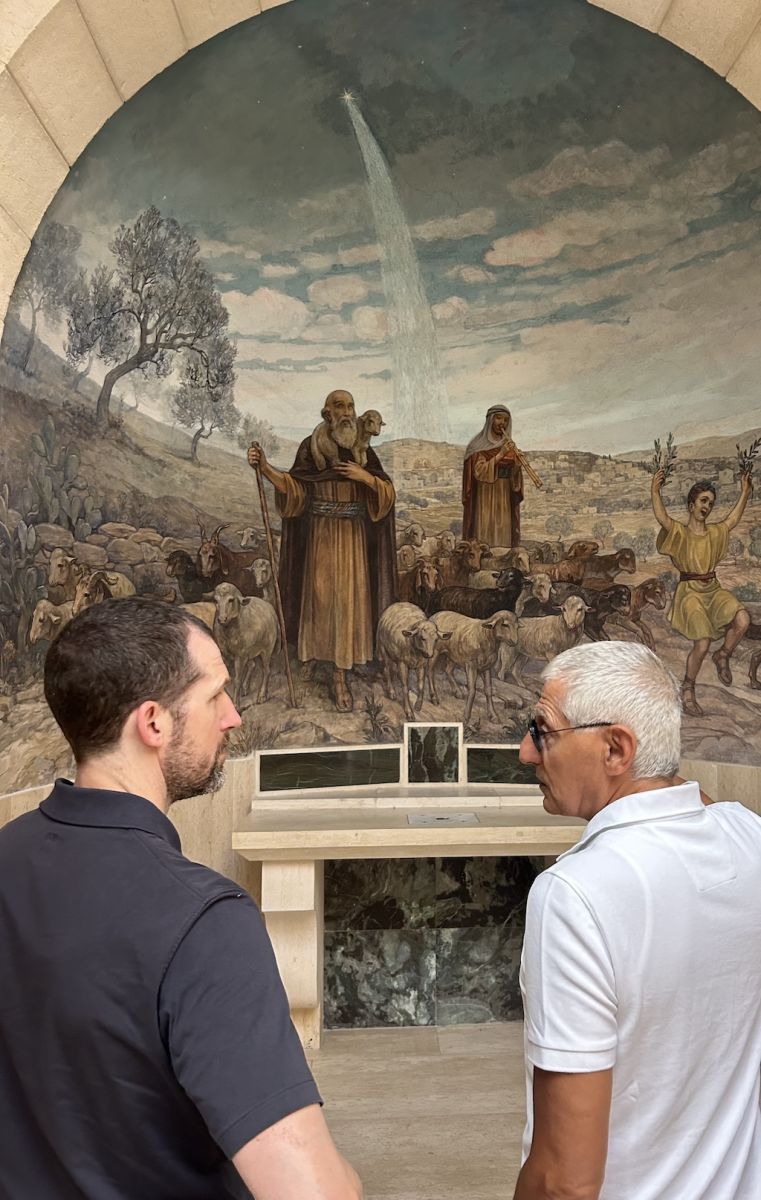
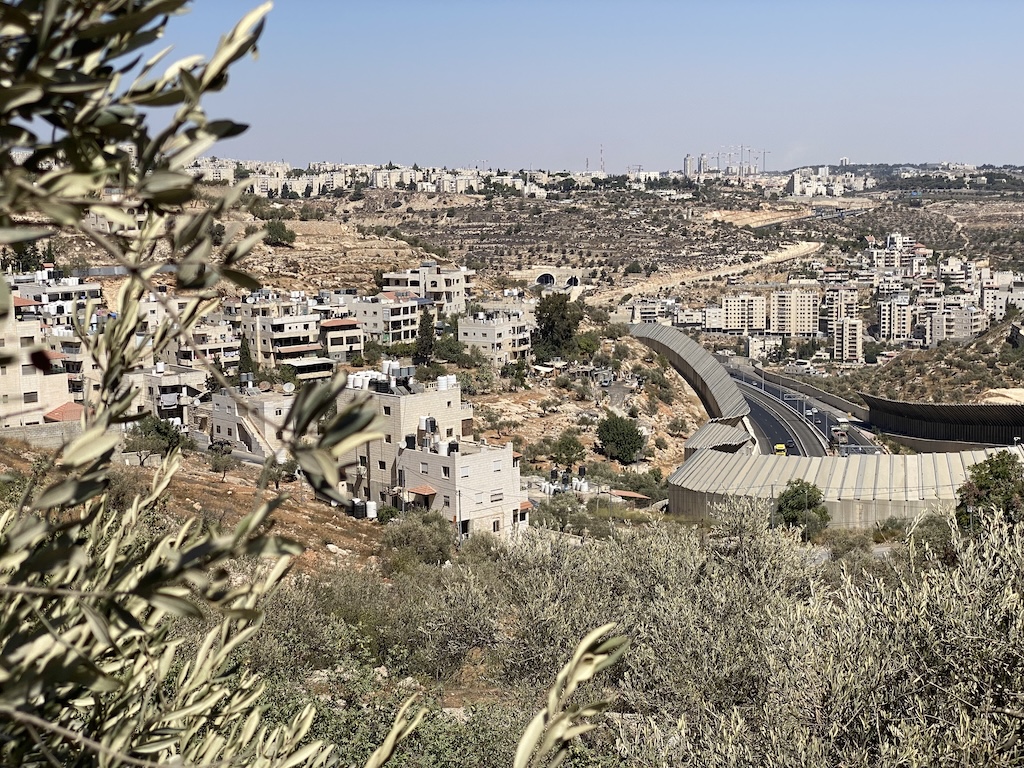
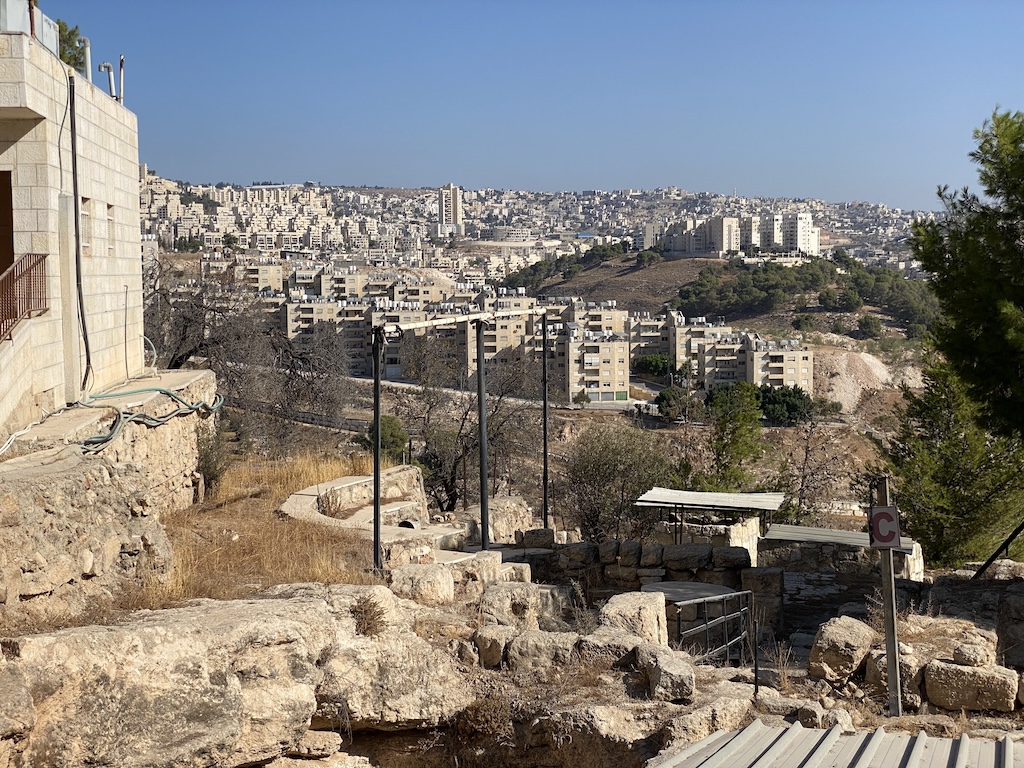
We started our pilgrimage at Shepherds’ Field, just outside Bethlehem in Beit Sahour. Overlooking the hills, we could see that they are now more covered than ever with Israeli settlements, many of them illegal, and the walled, restricted Israeli roads that cut the landscape. In 2015, Benjamin Netanyahu authorized the settlement that can be seen from the field as a means of blocking Palestinians from expanding Bethlehem in their own territory.
Our guide, Yusef, tells us the shepherds who came to see the baby Jesus were the poor Indigenous people in the area—the Palestinians. “We are considered foreigners in our own country. We have to carry visas in a country where we were born, while people from Russia and France are considered citizens for theological reasons. We have to carry passports to live where we were born.”
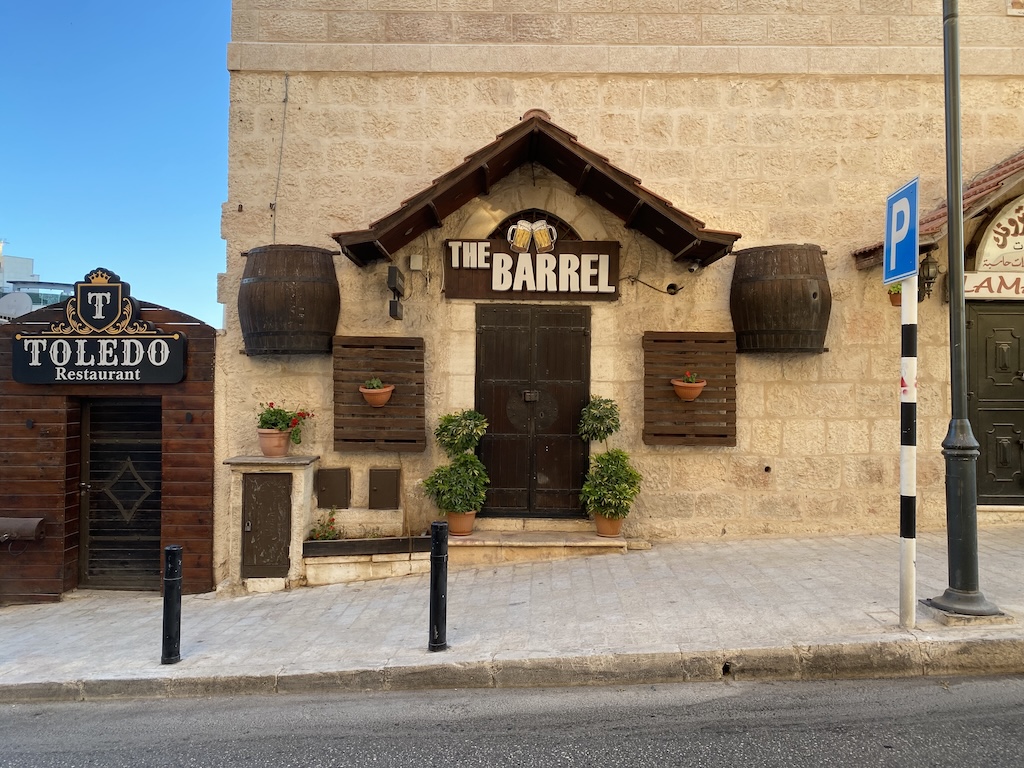
One night, we talked with the owner of The Barrel, a small bar that barely stays open because of the lack of visitors to Bethlehem, who shared some of his story with us. He told us that even though he was born in Jerusalem, he cannot even visit the city now because of restrictive Israeli government laws.
During our time, we would hear many stories from those in the West Bank that stirred many reflections on the land I grew up on, now spanning five generations, and tried to imagine being cut off from that land and living under occupation. Our visit also caused me to think often of the indigenous people of Canada who continue to live with the trauma of settler colonial displacement.