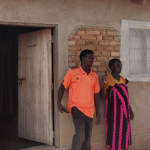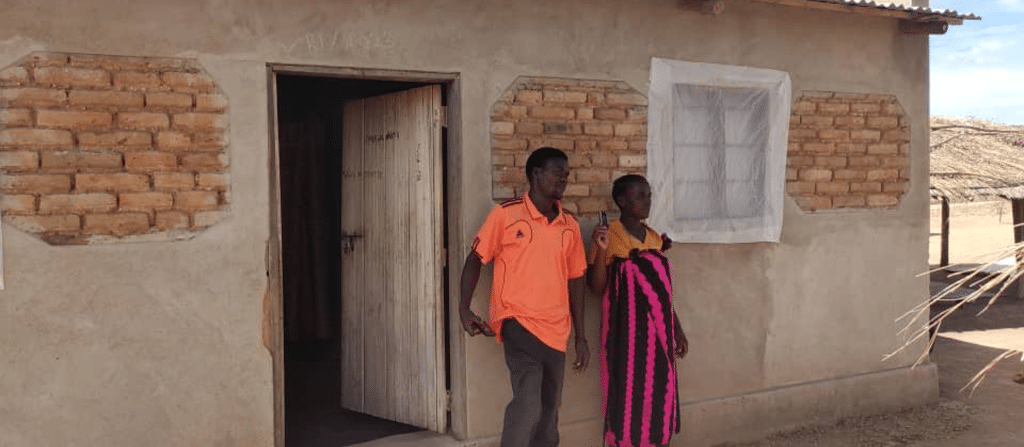
In rural Malawi, in Mwanyesha Village, 30-year-old Vincent Ng’ambi lives with his wife and five children. Until recently, the family shared a small, dilapidated house that offered little shelter from the weather.
“Life had been hard, living in a poor thatched house. Sunlight could hit us, and during the rainy season the house leaked, leaving us with an unbearable life,” he shared.
The effects of climate change meant that the farming methods the family had traditionally relied on were no longer enough to provide enough food, leading to shortages that had to be endured until the next harvest.
Vincent explained that excessive dry spells had affected crop production, and they could harvest only four bags of maize, which was not enough to feed the family until they were able to harvest again. The family needed to engage in low-wage labour to meet basic needs, such as the children’s school development fund, clothing and food.
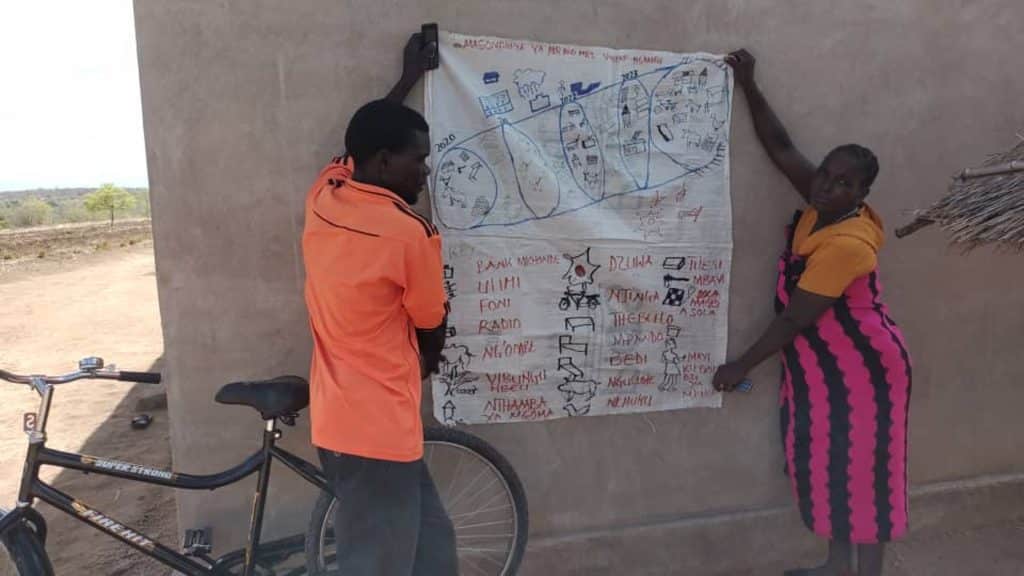
Their situation started to change when the family participated in the Lupembe food security project, implemented by PWS&D’s partner, the Synod of Livingstonia Development Department (SOLDEV).
The program introduced and trained Vincent in climate-smart agriculture technologies, self-help groups and household visioning as a way to fight climate change. During the household training with the Community Agent who encouraged them to articulate their dreams and aspirations for the future, Vincent and his family identified improving food production, increasing income, and constructing a safe, better house as the key goals.
Using what he had been taught, Vincent adopted the technologies right away. With the project staff’s extensive technical know-how in agronomic practices, maize production increased significantly, and he also diversified the crop by growing sesame, which he harvested.
Referring back to the family’s household visioning plans and the goals they set out, including constructing a safe home, Vincent moulded 6,000 bricks for the construction of the three-bedroom house with a seating room. With the money from crop production, more materials were bought to finish the house.
The remaining profit from the crop sale allowed the family to buy clothes for themselves and save for the self-help group.
“We are so grateful and proud of what we have achieved today. Thanks to the household visioning training we were able to dream bigger and set goals for our family. Our new house, made with strong bricks and covered with iron sheets, is a symbol of our hard work and determination. It is not just a place to live, but a sign of the better future we are building for ourselves. We shall be living in it and finish next year with cement flooring and windows,” he explained with tears of joy.
Future Plans
Today, the family plans to expand their climate-smart agriculture practice to 0.8 hectares and is exploring opportunities to secure loans from the Tikolerane self-help group to start a small business.
For the Ng’ambi family, the project’s impact goes beyond one season’s harvest. The new farming practices, savings habits, and family goal-setting are becoming part of everyday life, lessons their children can grow up with and carry forward from generation to generation.
Click below to learn more and respond with us.