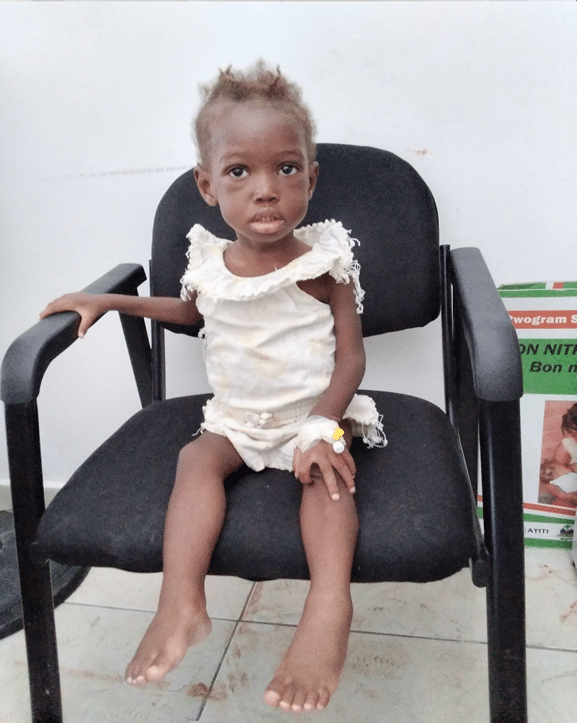
Dona Antoine was afraid when her baby daughter, Doriana, started to show alarming systems—swelling (edema), diarrhea, vomiting and trouble urinating. Doriana’s health deteriorated quickly.
Dona, just 20, lives with her partner, in a modest home they share with seven other people. While the family uses treated water and has access to a latrine, their living conditions remain difficult.
Doriana was born at full-term and Dona received regular prenatal care, as well as postnatal follow-up. Doriana’s health began to decline though when her mother introduced complementary foods at just six weeks, which likely contributed to Doriana’s condition.
Dona first sought help from a traditional healer. When that didn’t work, she took Doriana to several health facilities for treatment, but nothing led to improvement.
Feeling like it was her last resort, Dona followed the advice of a community health worker and brought Doriana to a hospital run by PWS&D’s partner, Zanmi Lasante. Doriana was immediately admitted into the malnutrition treatment program.
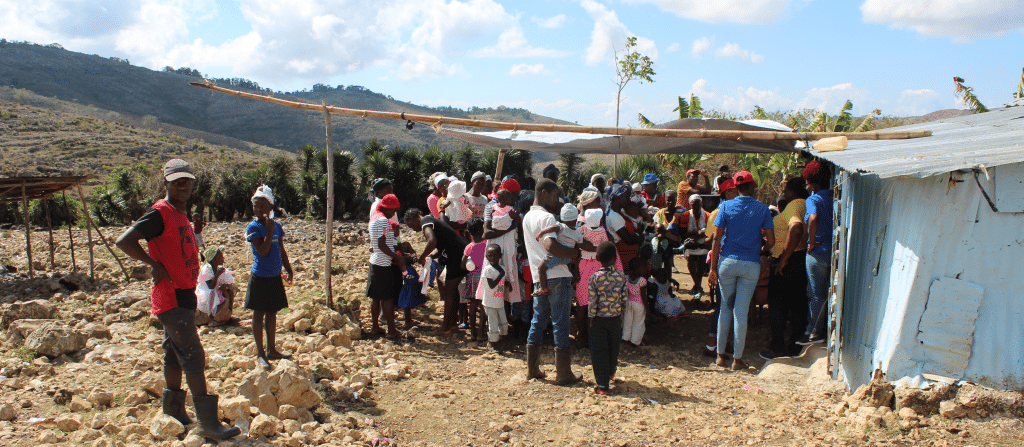
For almost a decade, Haiti has experienced an ever-deepening food security crisis, driven by violence related to armed groups, political upheaval and economic crisis. Additionally, the country is extremely vulnerable to the devastating effects of the climate crisis.
Roughly 52 per cent of the population are facing crisis levels of food insecurity, over half of these are children. Malnutrition is currently the leading cause of death for children under five in Haiti.
“Parents can no longer provide care and nutrition to their children as a result of ongoing violence, extreme poverty, and a persistent economic crisis,” said Geeta Narayan, a United Nations representative in Haiti. “Life-saving actions, such as screening children at risk for wasting and stunting, and ensuring malnourished children have access to therapeutic treatment, are needed now to save children’s lives.”
PWS&D, through our partner Zanmi Lasante, is doing just that. By focusing on prevention, screening and free treatment, they are working to reduce avoidable malnutrition deaths and sustainably improve the nutritional status of the most at-risk children.
Doriana was immediately provided with specialized care. She received six days of intensive therapeutic feeding, followed by a transition phase to home care.
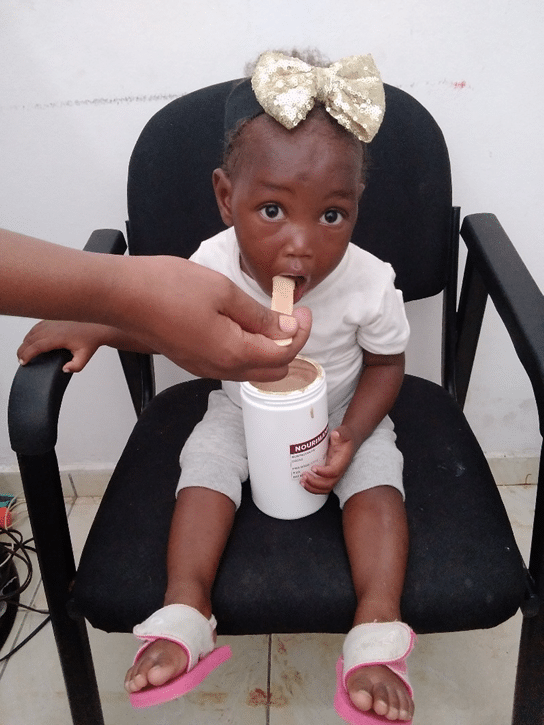
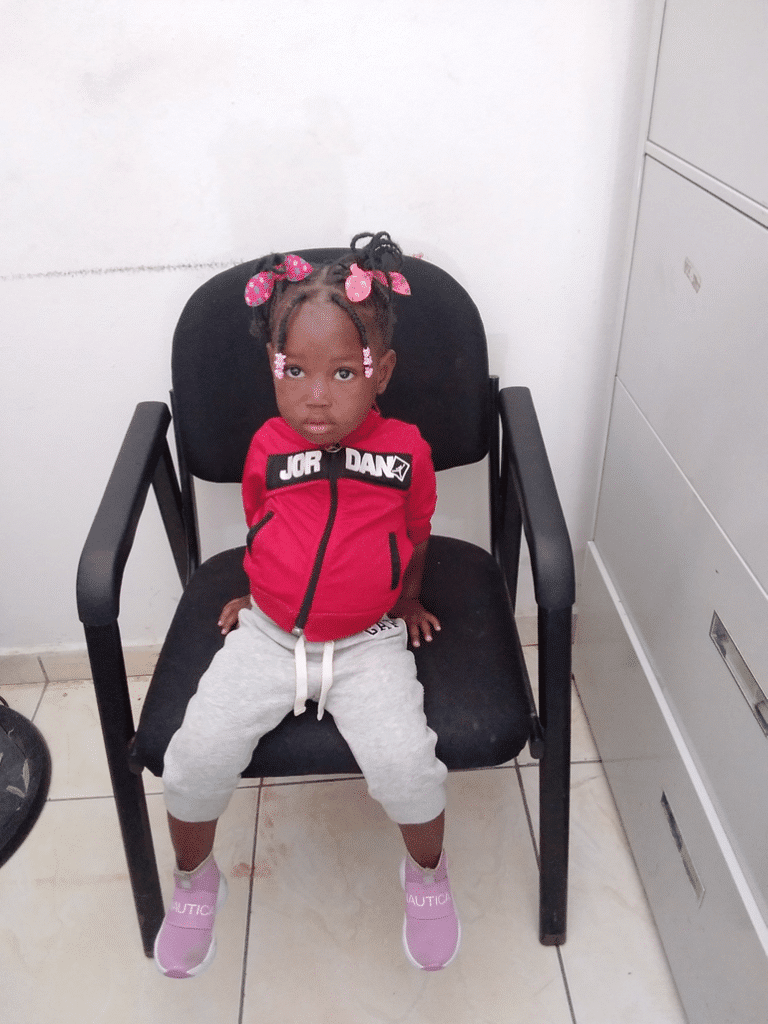
Recognizing that access to food remains an issue for many in Haiti, Doriana continued her recovery through follow-up outpatient care, as well as a supplementary nutrition program to ensure a full recovery. Dorian’s mother, Dona, has took part in in-depth educational sessions on keys aspects of maternal and child health, including the principles of a balanced diet for both infants and mothers.
Because of the care she received, Doriana has now fully recovered from her malnutrition. Her story highlights the project’s effectiveness and the importance of timely access to appropriate care for at-risk children.
Given the ongoing food crisis in Haiti, and its devastating effect on children, this project is more essential than ever. To support the project, please click the link below and mark your donation “Haiti malnutrition project.”

* PWS&D support for this project was matched up to 4:1 with funds from Global Affairs Canada through Canadian Foodgrains Bank. PWS&D is a member of the Foodgrains Bank, a partnership of 15 churches and church agencies working together to end global hunger.