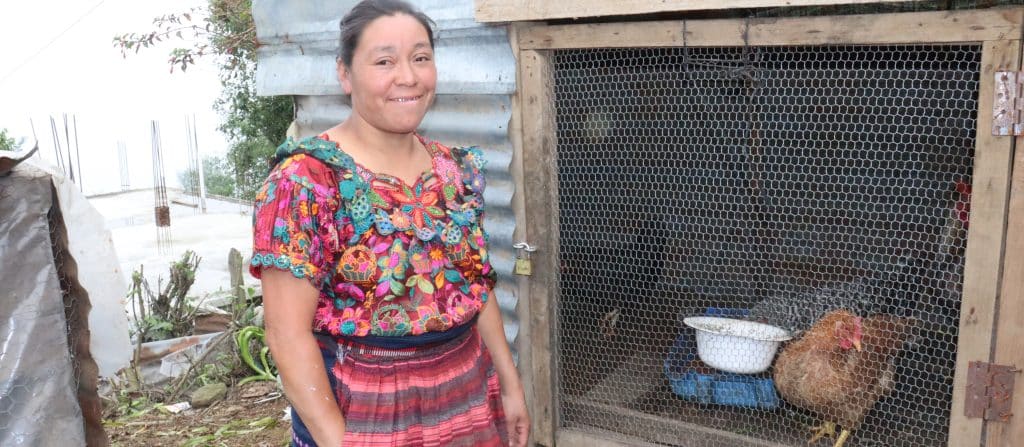
“I learned how to prepare nutritious foods to eat healthier, taking advantage of the food produced in my community.”
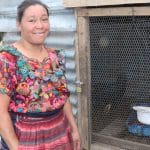
Margarita carries a lot of responsibility in her home. A single mother, she also cares for a half-sister with a developmental disorder, as well as her two nephews. “There are quite a few of us in the house and we don’t have much land to cultivate,” she shares.
In the Quetzaltenango region of Guatemala, where Margarita lives, many Indigenous farmers experience food insecurity. Households seek to grow their own food on farms that are too small to meet their daily needs. Even where space is available to plant their usual varieties of corn, beans, squash and herbs, often the soil is degraded due to overuse and the effects of climate change and does not produce good yields.
Like many of her neighbours, Margarita must travel to access enough productive land to grow food for her family. “What we harvest is not enough for the whole year. For this reason, we have to go out to look for work with the neighbors and we also go to the coast to plant corn on land that we pay to rent.”
Her peer Regina Delgado Vásquez also takes part in seasonal migration, leaving her home to go to the coast and plant corn. A wife and mother of adult children, all members of her family of five engage in agriculture on their one-hectare plot of land.
Both Margarita and Regina were selected to lead their communities towards food security, through a PWS&D program with partner Fraternidad de Presbiteriales Mayas. The agriculture and livelihoods project, which will begin a new phase in September, trains women ecological promoters in sustainable agriculture techniques.
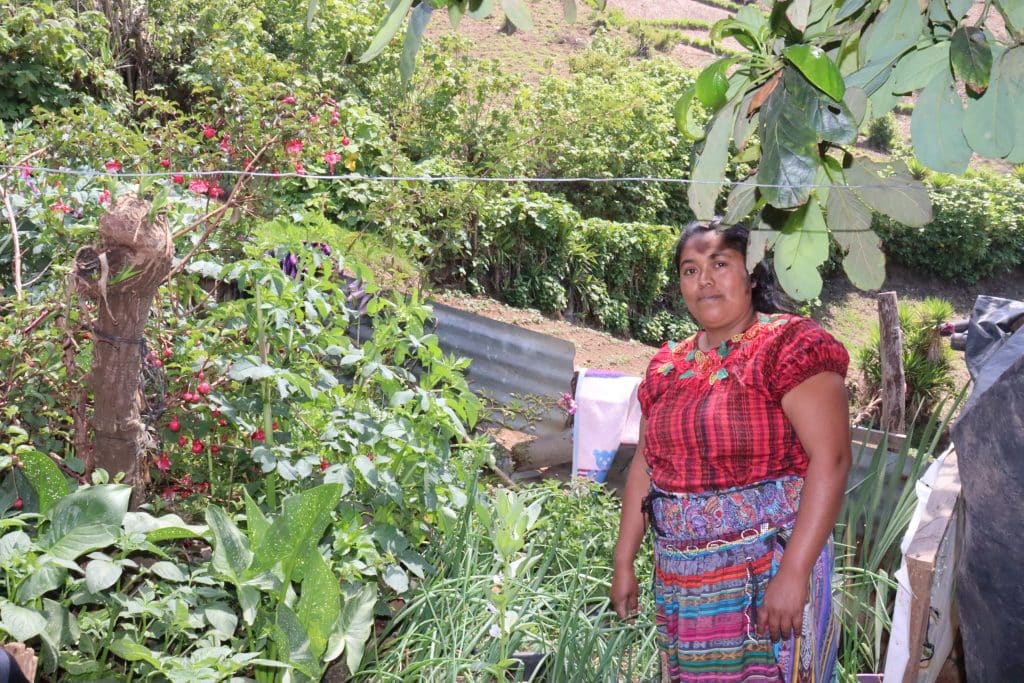
For Margarita, participating in PWS&D’s food security project resulted in having consistent food for her family, and sharing her newly learned techniques with others. “Now I plant my vegetables, even if it’s only a few, because Fraternidad is training me. The technician and the educator have taught me how to grow vegetables. I planted my fruit trees that the project gave me, and now I can vaccinate my chickens.” Regina explains the difference being involved in the project made in her life: “With the little land I have around the house I have been able to plant some vegetables and herbs for my consumption. I have learned to take care of my chickens that are useful for my consumption.”
Through the program, both Margarita and Regina also learned about food safety. Now, they boil the water their families consume to avoid diseases. Margarita also grows medicinal plants in her vegetable garden which her family consumes to stay healthy.
Regina likes to sell what she produces, especially her surplus herbs. She is also engaged in other productive activities to improve her financial situation, with the dream of one day owning her own house.
Both Margarita and Regina have passed what they have learned about soil conservation, sustainable agriculture, livestock rearing and forestry techniques to others. This program is just one example of the work being done in local communities, that multiplies impact manifold.