“The food aid took away our worry.”
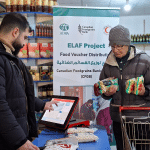
In December 2023, PWS&D wrapped up a two-year project in Pakistan. The program, focused on Humanitarian, Early Recovery and Development (HERD), was innovative in that it connected responding to urgent short-term humanitarian needs with longer term sustainable development goals. Supported by the Canadian government, it assisted 3,766 households in the Umerkot District of Sindh province.
Through the HERD program, the same families who accessed six months of emergency food support also received seeds during the early recovery stage. They also received instruction in farming practices adapted to climate change, including things like choosing drought resilient crops. Additionally, training was provided for women artisans to help them diversify their income outside of agriculture. This can help provide sustenance when crops fail due to climate events such as dramatic floods or extended droughts.
Consider the difference it makes a when family receives monthly food support during the lean season. They are less inclined to sell farming inputs and livestock, a practice which provides for immediate needs but creates disadvantages in the long-term. Or if a family recovering from a disaster does not have to spend everything they earn on food, how they can begin to rebuild their home.
The HERD program made a difference for the Mangrio family.
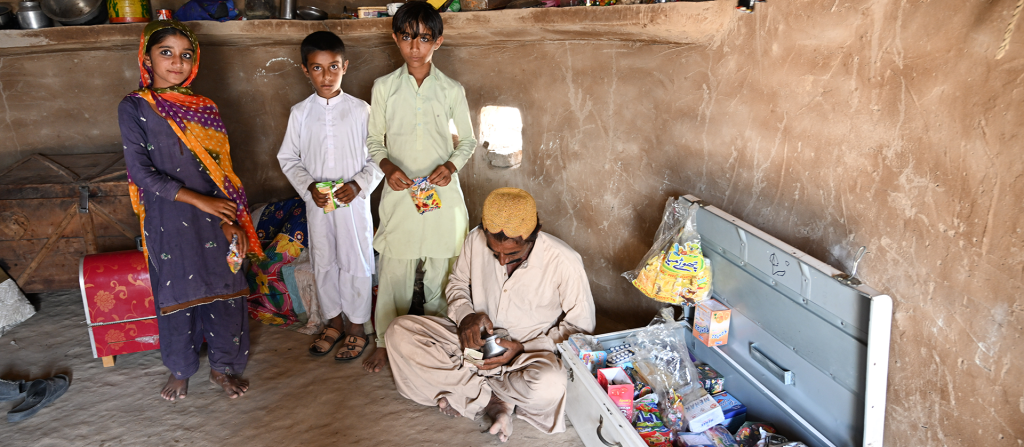
Prior to 2022 floods, Shabana Mangrio had a thriving clothing business, while her husband Saleh ran his own shop, selling snacks and other small provisions. They also farmed their three-acre holding and cared for 15 goats. When the deluge hit, their home was destroyed. Shabana’s work as a tailor suffered because very few people in her community were able to buy new clothing. Left with few options, the family borrowed money to rebuild their home.
This family was given seeds through the HERD program in the summer of 2022, which Saleh used to sow their plot. With food taken care of by the aid program, Saleh was able to use his earnings from the harvest to repay the loan.
As Saleh recalls, “[The harvest] was not what it should have been, had the rain stopped after irrigating the soil. Nevertheless, the yield was enough for me to sell some for cash and repay my debt. This was possible because of the last two instalments of food aid.”
Responding in Pakistan is vitally important because the country is ranked as the eighth most climate-affected in the world on the 2021 Global Climate Risk Index. With much of the country reliant on farming for their livelihoods, recurring drought and recent floods have severely challenged families’ abilities to earn an income, not to mention their safety. Sindh region is unfortunately considered to be at a crisis level for food insecurity.
Prior to the project, only a small number of the surveyed project participants in Umerkot were considered adequately food secure. By the end of the project, a significant percentage of those surveyed showed improved food security, according to a measure call the Food Consumption Score.
Asked what he thought was the greatest advantage of participating in the program, Saleh unequivocally said that it had made him debt free for the first time in many years.
“Normally, when crops fail, even if we recover the cost of the seed, it is a loss because the reduced harvest cannot feed us. Most times we end up selling our livestock only to pay for food items. When I sold my goats late last year, I was not consuming the money but investing it in housing for the family. That was a win for us (thanks to the project).”
PWS&D is now working with a local partner and the Foodgrains Bank on a three-year follow-up project for communities in Umerkot to help them better adapt to climate change impacts and to sustain the improvement in food security resulting from the HERD project. Households will receive kitchen garden inputs and training on conservation agriculture, livestock management, and micro-entrepreneurship. The project will also involve construction of water storage structures to help address water scarcity, which is a common problem in most villages.
*This story was first printed in the Spring 2024 issue of Presbyterian Connection newspaper.