By Dr. Brett H. Meyer, PWS&D Committee Co-Convener
On the last and greatest day of the Festival, Jesus stood and said in a loud voice, “Let anyone who is thirsty come to me and drink. Whoever believes in me, as Scripture has said, rivers of living water will flow from within them.” (John 7:37-38)
From May 5-16, 2025, a group of Presbyterians from Ontario and Quebec visited PWS&D’s projects in Guatemala. Brett, who is a co-convener of PWS&D’s committee, was a member of the delegation. Brett is an Associate Professor of Electrical and Computer Engineering at McGill University, and attends St. Columba by-the-Lake Presbyterian Church in Pointe-Claire, QC.
Eliuteria Alion Tomás, a Maya Mam farmer in Comitancillo, San Marcos, thought that she was too old to see the day when she’d have reliable access to water. In Comitancillo, you’re always thinking about water. People often have a municipal water source, but there’s no telling when the water will be on. Eliuteria knows the value of reliable access to clean water: it means healthier families, healthier farms and a healthier environment. Water is life, and water is prosperity, not only for humans, but for all creatures.
Our time in Comitancillo was marked by limited access to water. Comitancillo is in the western highlands of Guatemala. Its water is not considered safe to drink, and even in the heart of the city of 90,000, water storage is essential. Our ability to shower, wash our hands, flush a toilet, all depended on whether the water was on, and if not? Then, it depended on whether there was water in the pila.
A pila, a Guatemalan essential, is a sink, often concrete, divided into three sections. In the middle there is a basin for fresh water storage, typically about 90 litres. (The average Canadian uses over 200 litres a day.) Washing happens in the left and right sections of the pila. To keep the basin water clean, you scoop water from it to use over the work areas on the sides. When the water is on, you fill your pila. But what if rather than being off for part of the day, as was our experience at the hotel, the water is off for days at a time?
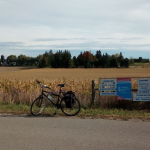
Access to a reliable water supply is transformative, not only because it supports daily health and hygiene, but also because it supports farming productivity. This is especially clear looking at the corn fields. Unlike in North America, where corn is planted in the spring and “knee high by the Fourth of July,” as my grandmother would say, in May in Guatemala we saw corn in every stage of development: just planted, maturing, just harvested. We also saw yet unplanted fields that we were told would be corn (and beans, and squash) once the rains came.
This year, the rainy season—May to October—is getting a late start, delaying planting. Reliable access to water supports irrigation. That can mean three or more plantings and harvests in a calendar year, and in turn better nutrition and greater income.
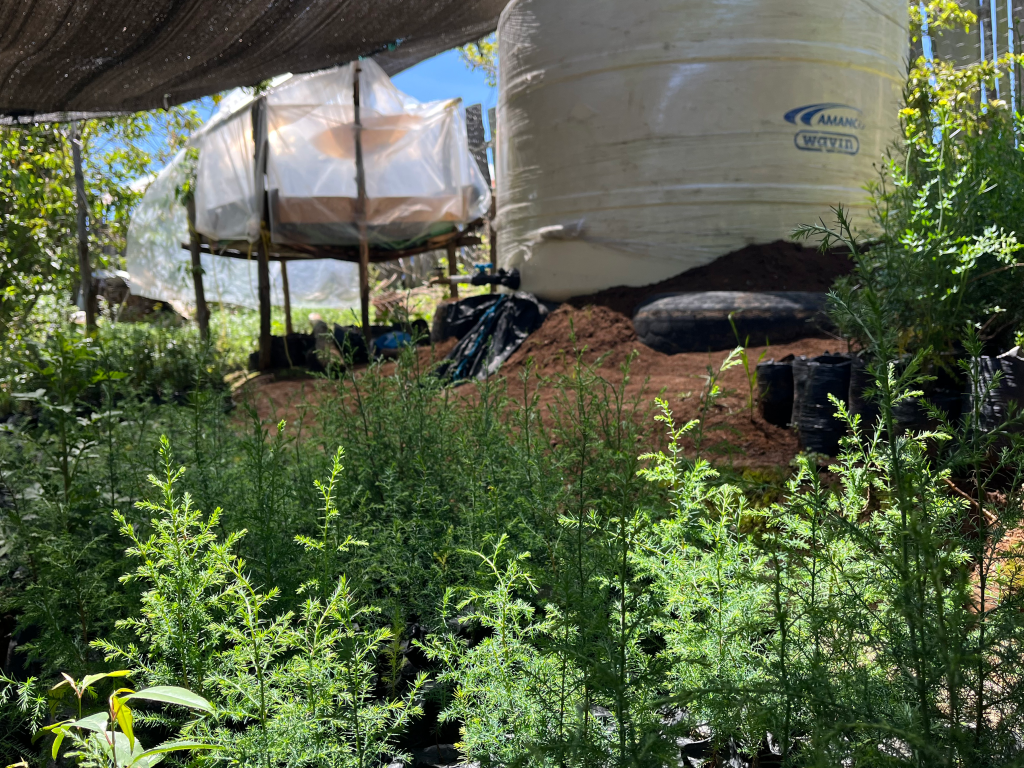
Eliuteria has a relatively large farm, at 32 cuerdas (20 m x 20 m). Until recently, reliable access to water complicated daily living as well as farming. Though she has a municipal tap, it only works a couple of days a week. Through her participation with AMMID, PWS&D’s local partner, she received a water tank that can hold 2,500 litres. When the water is on, Eliuteria fills her tank, making it possible to fill her pila for daily water use, and provide water for her farm. During the rainy season, she also collects rainwater runoff from the roof of her home; this goes in the tank, too.
AMMID’s goal is el buen vivir, the well-being, of Indigenous Maya Mam people in the region of San Marcos. AMMID works with 1,500 families across 46 communities, in support of: food sovereignty, Mayan equity and identity, public health, and the defense of Mother Earth. Through its work with AMMID, PWS&D has financed the installation of 131 2,500 litre water tanks, directly improving the daily lives of many families and investing in local enterprises, e.g., a tree nursery.
AMMID, with its emphasis on the defense of Mother Earth—Madre Tierra, Qtxu Tx’otx’—takes a comprehensive approach to caring for the entire local living water system, and all those creatures dependent upon it. AMMID’s work to combat deforestation, and consequent soil erosion and water system degradation, is a particularly illustrative example. Deforestation occurs in part because wood, a key energy source, is used for cooking as well as boiling water to make it safe for consumption.
AMMID works to improve water safety by distributing eco filters, teaching organic farming practices, and encouraging the reduction of consumption of single-use plastics. This reduces the need for boiling, reducing wood use. AMMID also supports the development of local tree nurseries, and execution of reforestation projects. Finally, the agency teaches youth in its Political Formation School about the importance of advocacy and civic engagement with respect to environmental concerns.
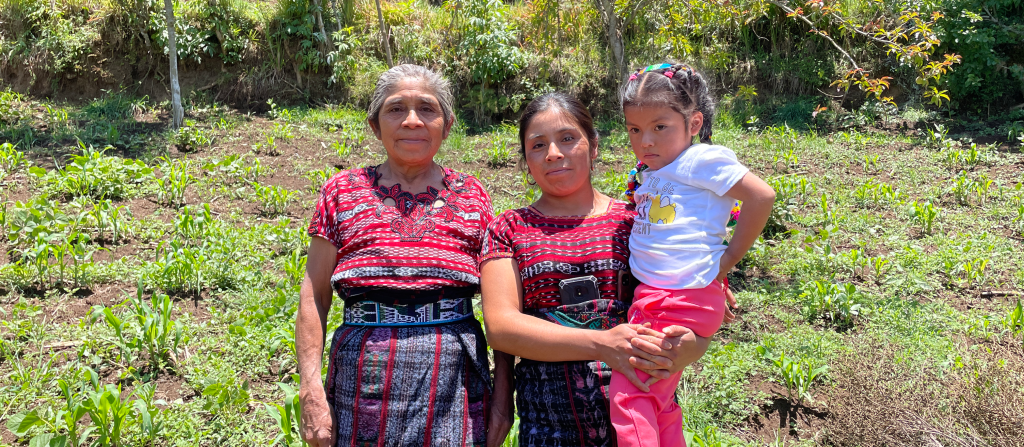
Eliuteria’s daughter Mariela and her family recently returned to live near Eliuteria and work her land. Eliuteria’s daughter, Mariela, will inherit, she told us proudly, as will Mariela’s daughter in the future. Her water tank will do much to secure that future. Theirs, and the story of the many that have benefited from the work of AMMID, in partnership with PWS&D, demonstrates the transformative power of clean water.
Consider how your life would change if you lost something we take for granted daily: turn on the faucet and clean water comes. Imagine giving your children the gift of water in a world where the life and success of families and communities hinges on it. Rivers of living water, indeed!
To learn more about and support PWS&D’s work in Guatemala, visit WeRespond.ca/guatemala.
* This story was originally published in the Fall 2025 issue of the Presbyterian Connection newspaper.