Adapted from a story written by PWS&D’s partner in Afghanistan.
In Afghanistan, within Bamyan province’s stony mountains, lives Zahra. A 58-year-old widow, she became the steadfast guardian and provider for her children last winter, following her husband’s passing.
Zahra’s husband, Hossein Ali, died last winter due to severe bone rheumatism exacerbated by the region’s bitter cold and the family’s inability to afford medical treatment. Their eldest daughter, Masuma, lives with a disability affecting her hand, while their 16-year-old is also in need of medical support. Zahra explains, “All day, I watch Jamila, whose leg was permanently disabled in a road accident years ago, and I don’t know how to afford her treatment or care.”
Earning an income is difficult for Zahra’s family. Zahra’s youngest daughter, 12-year-old Zoohra, works as an apprentice in a local tailoring shop, where she earns approximately AFN 1,500 (less than 30 Canadian dollars) each month. It is a meagre sum, yet it helps to keep the family afloat.
One of the devastating effects of poverty is forced migration that splits families. Zahra’s only son had just completed his schooling when he was compelled to leave Afghanistan in search of work. With no job opportunities in Bamyan or elsewhere in the country, he borrowed money from relatives and migrated to Iran. However, conditions for Afghan migrants there remain dire. He remains unemployed, unable to repay the loan he took out for his journey and now faces the threat of deportation.
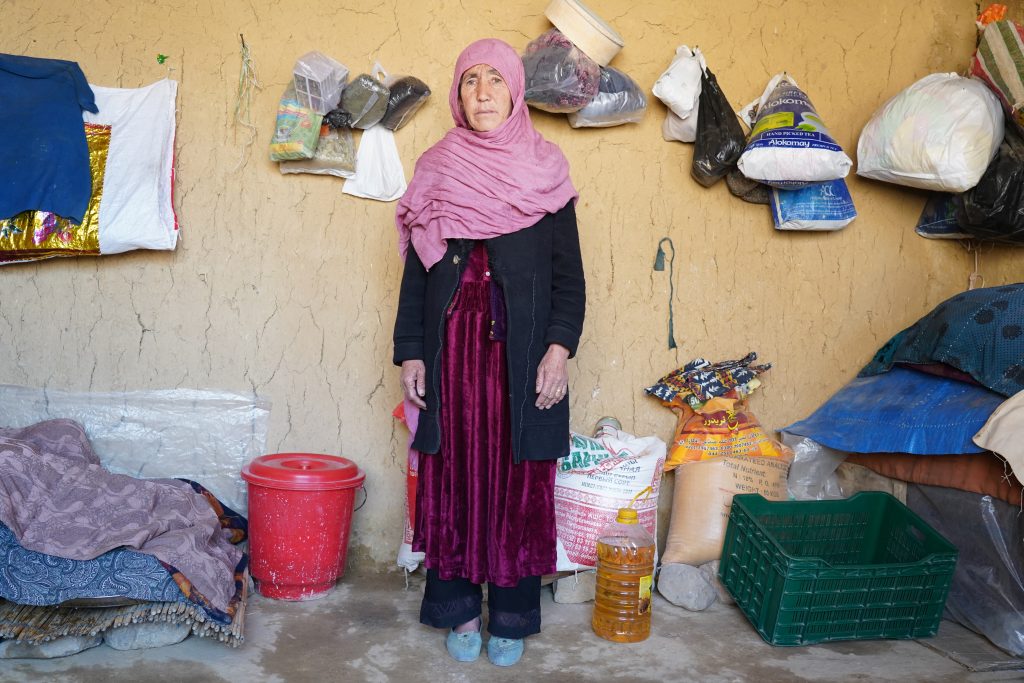
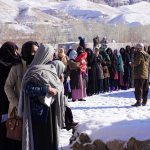
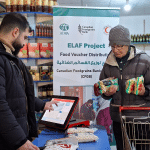
Zahra and her children were among the participants of the recently concluded Cash for Food initiative in Bamyan. Through this project, which was implemented by PWS&D’s local partner in Afghanistan, 3,810 of the most marginalized households in the area received the equivalent of $275 CDN per household over a five-month period. Cash transfers allowed each family to make spending choices based on their specific circumstances. Recognizing ongoing need, PWS&D hopes to begin a new phase of the project for the coming fall and winter.
With her daughter’s monthly income and the cash assistance provided through the project, Zahra and her family’s most urgent food-related challenges were eased significantly. “This assistance saved us this winter from hunger, malnutrition and even death. The aid we received was used to buy food and fuel, allowing us to care for our family without borrowing money. For this, we are truly grateful to your staff and your institution.”
With a voice trembling with emotion, Zahra expresses gratitude, “Thanks to your support, we made it through [the winter] safely. Thank you for ensuring that families like ours, who are genuinely in need, were included in this program.”
To protect the security of project participants, the names in this story have been changed. PWS&D is also not naming its partner in Afghanistan to help ensure their safety.
*This project received support from Global Affairs Canada through Canadian Foodgrains Bank. PWS&D is a member of the Foodgrains Bank, a partnership of 15 churches and church agencies working together to end global hunger.
Respond with us