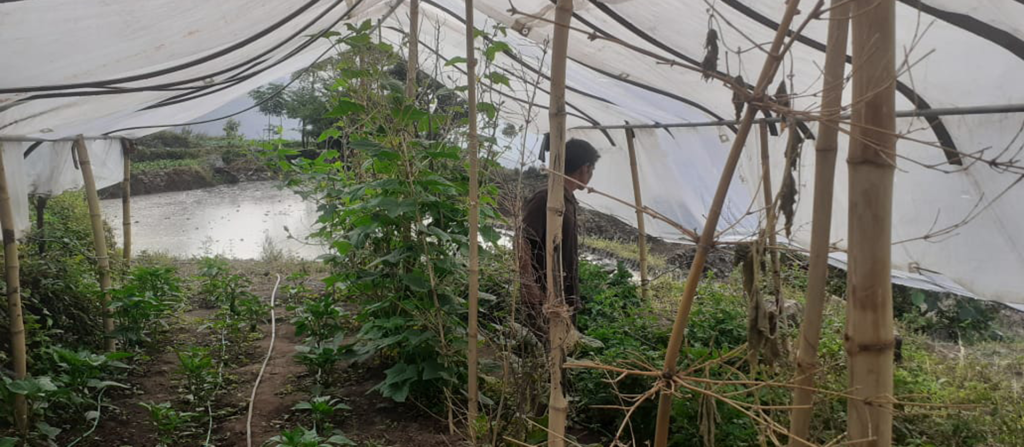
In Nepal, Sakkal had a keen interest in agriculture. However, a lack of training, resources, and community support, limited 60-year-old Sakkal’s productivity. In addition, his lack of funds and limited knowledge of modern agricultural techniques, meant he lacked the means to transform his farm into a sustainable, income-generating operation. Sakkal was also unaware of how to prevent and treat his plants for diseases using organic pesticides and fertilizers.
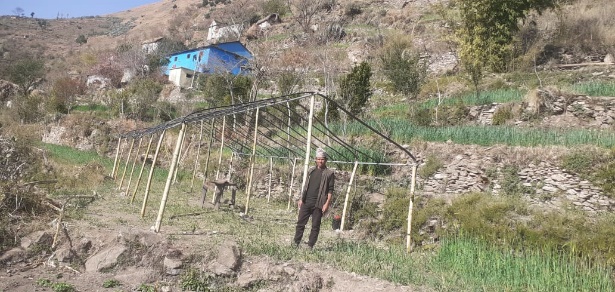
Sakkal’s situation changed when he joined a PWS&D-supported project. The project formed the Phulbari Swabalamban Group (Self-Help Group), which included 25 members from the community. The group aims to improve the living standards of poor people in their community. Sakkal was empowered as a member of the Self-Help Group, where he discussed social and economic issues and made action plans to resolve them.
Considering his willingness and involvement in agriculture, Sakkal was selected by the group to promote a model farm in his community, which would serve as a demonstration plot for other farmers. The project provided agriculture-related training in seasonal and off-seasonal vegetable farming, high-value crops, and integrated pest management. Sakkal was also supported with a greenhouse and seeds.
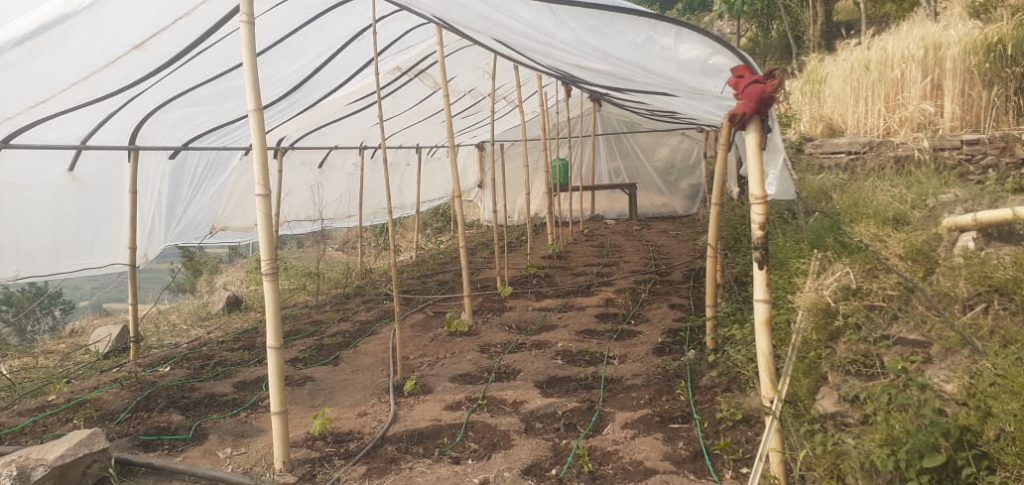
With determination and support from the project, Sakkal transformed his farm, adopting climate-resilient farming practices. He started growing various vegetables, including tomatoes, chillies, cucumbers, pumpkins, and eggplants, significantly improving his livelihood. His success inspired other villagers to learn similar farming initiatives to enhance their livelihoods.
Sakkal is thankful that he can now provide for his family doing something he loves. He expressed his gratitude, saying, “Thank you, INF Nepal, for giving me a different kind of opportunity and encouragement to transform my ongoing farming practices to climate resilient farming.”