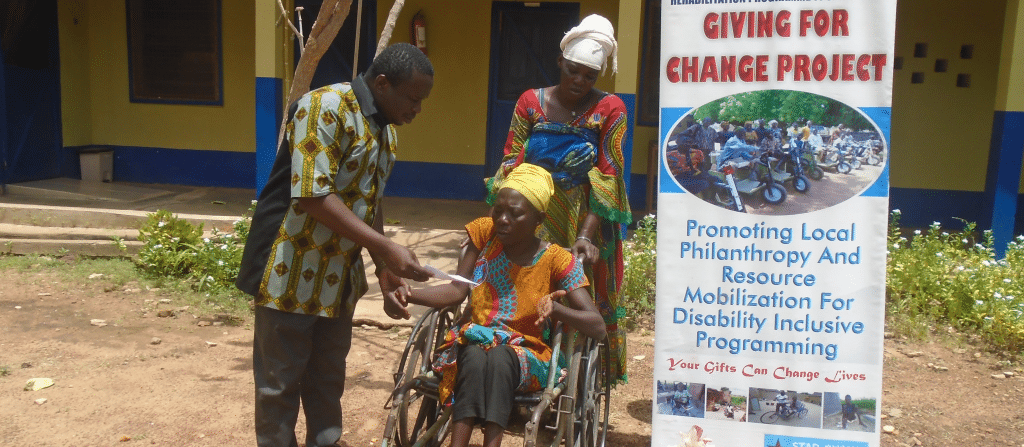
When Ama Mahamudu received a wheelchair from the Community-Based Rehabilitation Program (CBR), it was more than a lifeline. It meant she could now move freely and, eventually, help support her family.
The 47-year-old from the Songo community in the Garu District in Ghana, was left physically disabled due to polio when she was young. Unable to walk, Ama grew up in poverty, as her parents were peasant farmers. She could not access the best health care due to poverty and the stigma surrounding disability.
During a door-to-door survey, the CBR team identified Ama as someone who required assistance.
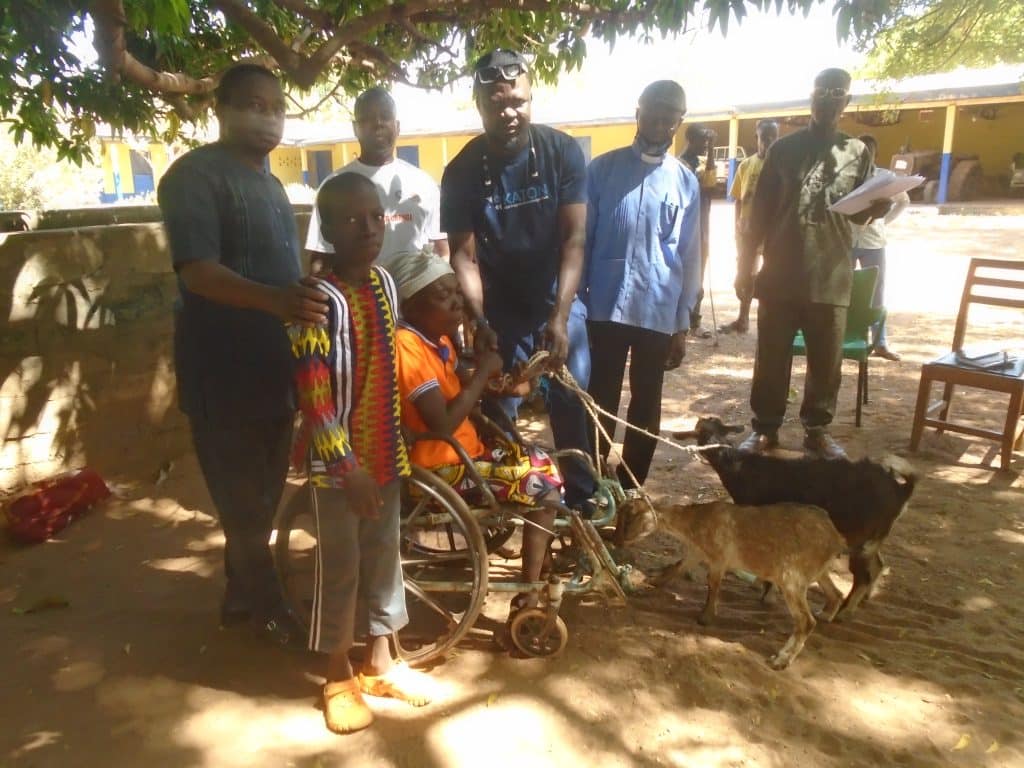
The program, run by PWS&D’s partner The Presbyterian Church of Ghana, provided Ama with a wheelchair to improve her mobility. She was very excited to be able to move. The project team also provided Ama with food items, cash and livestock to empower her economically and diversify her sources of livelihood.
Today, Ama is mobile and well-integrated in the community.
“My life has changed since I came into contact with the CBR Team. I can now move and interact with others. I am receiving help from my family members to rear the goats I received from the CBR programme, and I hope to soon be out of poverty. Thanks so much to CBR and their partners for coming to my aid through this timely intervention,” she shares.
Ama Mahamudu’s story is a reminder that timely and inclusive support can transform lives. With continued support from PWS&D and community partnerships, individuals like Ama can overcome barriers and build sustainable livelihoods, thus breaking the cycle of poverty.
Respond with us.