South Sudan continues to face a prolonged humanitarian crisis caused by severe food insecurity, economic instability and security issues. In the Aweil East region, the situation has been intensified by the arrival of South Sudanese nationals who had fled to neighbouring Sudan to find safety, now fleeing conflict there. This steady influx has placed immense pressure on already limited food supplies, worsening existing vulnerabilities and further undermining food security across the region. Recurrent disasters have only deepened the crisis.
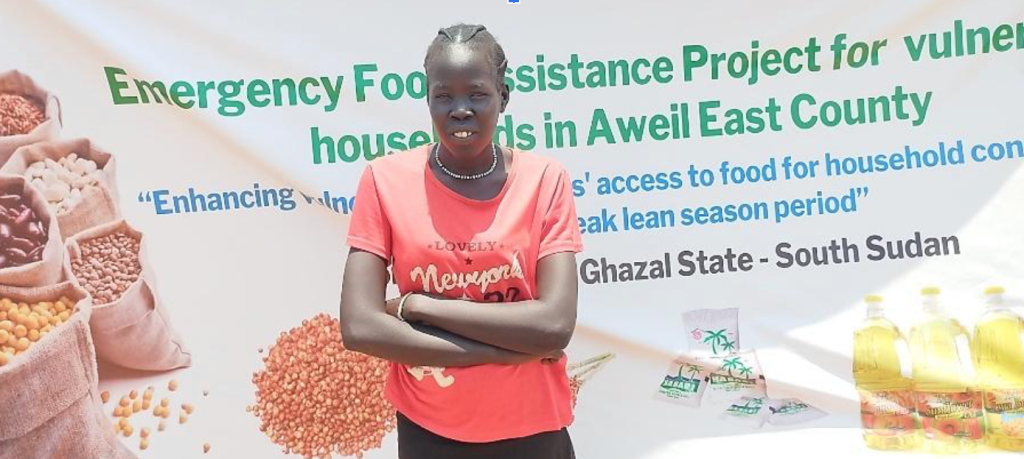
Among those affected is Nyibol Dut Majak, an 18-year-old who assumed responsibilities far beyond her years as the eldest of six orphaned siblings — three boys and three girls. The children lost their last surviving parent, their mother, to a terminal illness in 2025.
During her mother’s illness, which left her bedridden, Nyibol, had no choice but to leave her education to take care of her siblings and manage the household. With no breadwinner in the family, she and her younger brother turned to tedious labour. Though they had little strength, they worked tirelessly for others, struggling to meet the family’s basic needs.
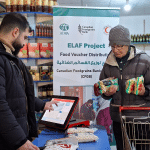
Nyibol’s family was identified by local chiefs as one of the households most in need of assistance. Through a food assistance project initiated by Tearfund South Sudan, the family received food rations monthly for three months.
“This assistance has revived my ambitions for pursuing school. I almost gave up, having dropped out repeatedly to support my family. By now, I should have been in high school, but our circumstances have held me back in primary school,” Nyibol reflected.
In the second round of food assistance, Nyibol received 105 kilograms of sorghum, 11 kilograms of beans, 6 kilograms of oil and 1 kilogram of salt. She carefully divided the rations into three parts: one for home consumption, one for sale to cover school fees and one for future use.
The food aid rationing allowed her to return to school, where adult learning sessions helped her balance her studies with household responsibilities.
“My relationship with teachers had been strained because I couldn’t meet school demands. But after selling part of the food rations to settle my fees, I was able to rebuild that trust. Some teachers are now supporting me to catch up with my classmates,” she said with a hopeful smile.
Today, Nyibol is about to sit her primary eight exams, a milestone that once seemed beyond her reach. While many of her peers are already in their third year of high school, she remains determined that her sacrifices and resilience will lead to her success.
Nyibol’s story is just one of the 1,335 households that received support. Through this aid, families like Nyibol’s are helped not only to survive but also to begin rebuilding their futures.
“Because of the food assistance, I have now postponed giving up. I thank the chiefs, Tearfund, and the Canadian people for their generosity. Without this assistance, I would not have had the chance to return to school.”
The situation in South Sudan remains dire, but with your support, we are making a difference.
* PWS&D support for this project was matched 4:1 with funds from Global Affairs Canada through Canadian Foodgrains Bank. PWS&D is a member of the Foodgrains Bank, a partnership of 15 churches and church agencies working together to end global hunger.