“Even with a small piece of land, it’s possible to earn a good income with low investment.”
These words of Ankhu Jaishi, a 30-year-old program participant from the Kalikot district of Nepal, describe the ethos of farmers around the world who participate in self-help groups, where they share knowledge about conservation agriculture techniques to make modest plots of land work harder and produce more, in the face of increasingly challenging climates.
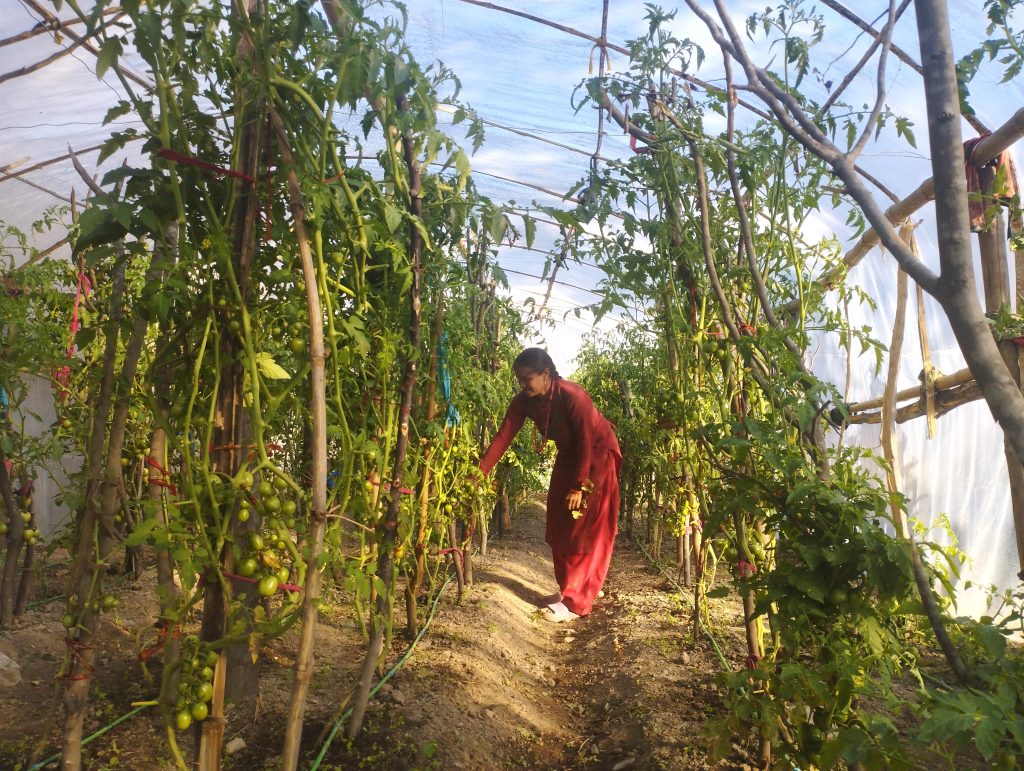
Ankhu and her husband support their four children, as well as his mother. Prior to Ankhu’s participation in the project, having enough food to meet their daily needs was difficult. So was paying for clothing and school fees for the children. As a result, Ankhu’s husband was forced to seek seasonal work in India.
Since 2023, PWS&D has been supporting a three-year project through International Nepal Fellowship to help the most marginalized groups in the area where Ankhu lives. Her circumstances improved when she joined a self-help group through the project and received farming inputs like a plastic greenhouse, drip irrigation set, vegetable seeds, plastic drums and sprayers, as well as training on climate-resilient farming. The vegetables Ankhu can now grow and sell at the market are diverse: cauliflower, cabbage, radishes, cucumbers, tomatoes, chilis, garlic, onions, beans, pumpkins and potatoes fill her plot of land.
As a model farmer, Ankhu’s farm is an example to others in her community, and she teaches them about the techniques that made a difference for her. Ankhu proudly shares, “joining the self-help group changed my life.”
Beyond Subsistence Farming
Nepal sits very low on the human development index; among South Asian countries, it ranks stronger than only Afghanistan and Pakistan.
Over 80 percent of the country’s population is engaged in agriculture to meet their food needs, including in Kalikot. However, only around four percent of households in the district have enough agricultural production to be food secure every month of the year. Working largely as subsistence farmers, many do not have awareness of or access to advanced technologies such as irrigation facilities. This insufficiency leads to a high rate of seasonal migration—often the men in marginalized households make their way out of the community and even into a different country to support their families.
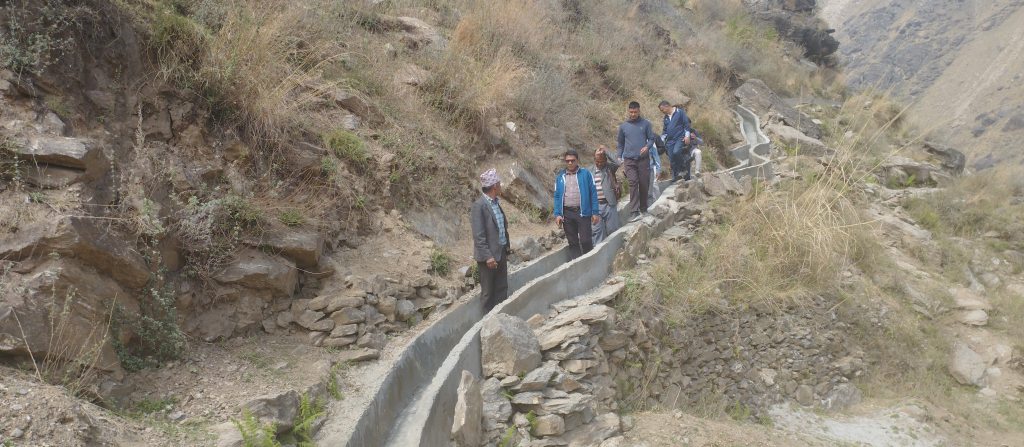
PWS&D’s programming in Kalikot provides the supplies people need to plant and harvest from their farms year-round. Goats are also given to households participating in the program. Most importantly, utilizing model farms like Ankhu’s, the program provides guidance on how to implement more climate-resilient farming approaches. Using the techniques they learn such as nursery management, drip irrigation, implementation of organic fertilizers, mulching, intercropping and planting disease-resistant varieties, farmers increase the number of months that their land can be productive, producing food both for daily consumption and to sell at the local market.