For many Haitians, survival has become an act of resistance. With economic collapse, political instability, insecurity, and lack of access to healthcare and food becoming less the temporary effects of a crisis, but a more permanent reality. Women and children are the most affected. Daily essentials are becoming scarce, and the risk of malnutrition is critical for many.
To address these concerns, PWS&D, in partnership with our local partner, the Center for Nutrition and Education for Women & Children, has launched an initiative that addresses two areas of public health: maternal and infant malnutrition, and women’s mental health. The goal of the project is to treat women and children at an early stage to help prevent babies from being born malnourished and ensure mothers are in good health while nursing infants.
Mothers and Children
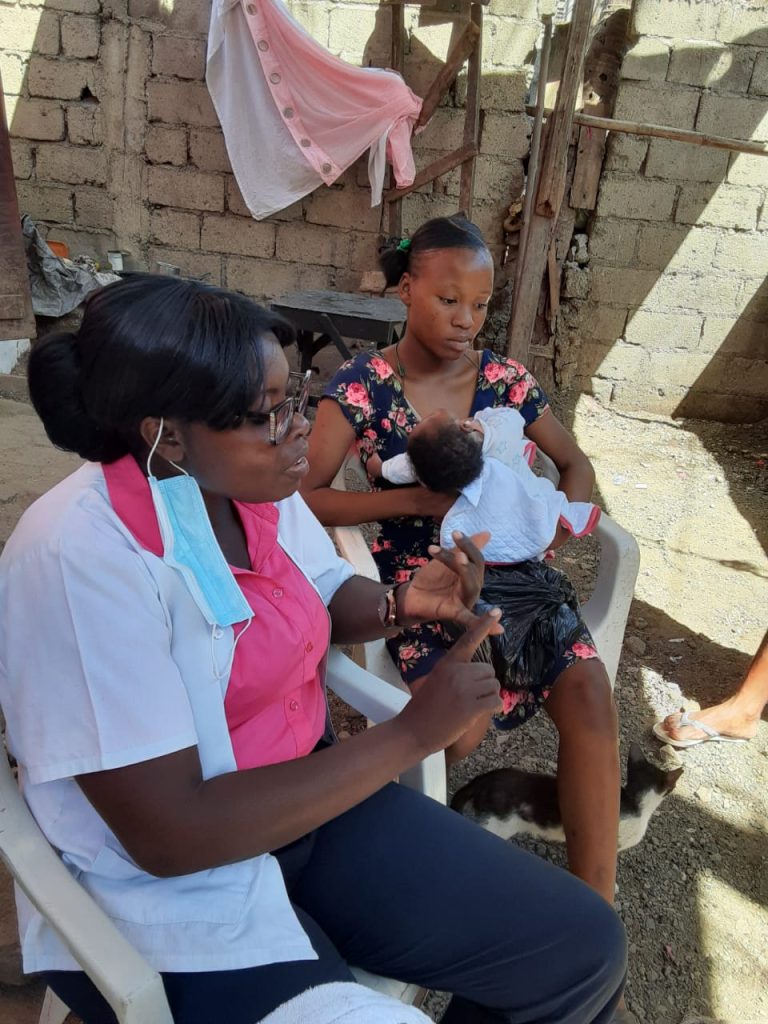
Dorélus Joceline, a 17-year-old first-time mother, was under pediatric observation with her newborn for routine check-ups. During her visit, she mentioned experiencing back pain. The program staff took the time to show her several comfortable positions she could use while breastfeeding her baby to ease the strain. At the follow-up visit, the newborn was doing well, feeding regularly and sleeping for long hours during the day. Joceline, however, explained that while her back pain had disappeared, she had started experiencing headaches instead. The staff encouraged her to rest more often, especially to sleep when her baby sleeps, and prescribed a painkiller to help relieve the headaches.
For Choute Philomène, the program came as a welcome initiative. The 34-year-old was happy to receive a visit from the program at her home. She expressed that she did not intend to do any prenatal follow-up during this pregnancy, her fifth, due to a lack of income. With the program though, income isn’t a factor and she is able to access the care she needs.
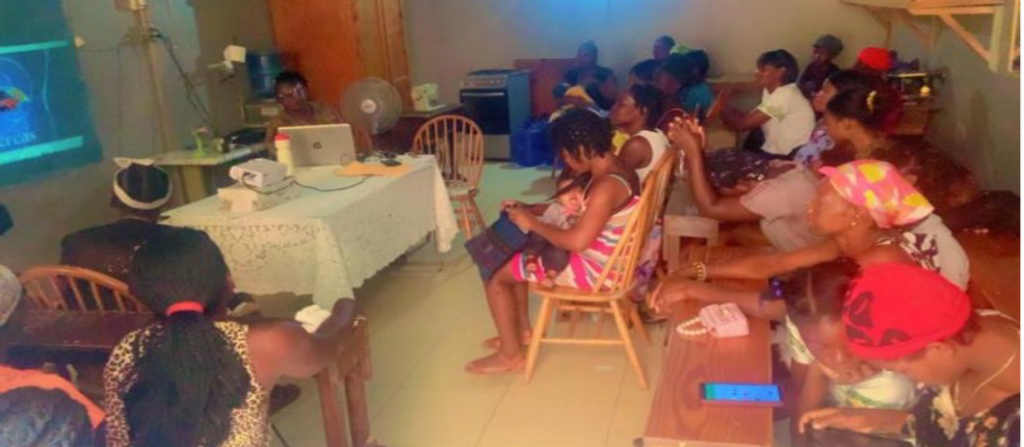
The program supported 20 participants, providing telephone calls, home visits, prenatal consultations, and training sessions with nutritional support. Through the program, mothers attended workshop training on topics such as diabetes and the causes of malnutrition in newborns.
Because of the precarious circumstances they live in, these women are very grateful for the program’s support, but there is still much work to do. To support this project or others like it, click the link below.